







































Latvia's Golden Visa has run since 1 July 2010, longer than almost any other program in Europe. It remains the lowest-cost route to EU residency on the continent: EUR 50,000 through the business investment route, against a EUR 250,000 floor in Greece, Italy and Portugal.
That cost advantage has made Latvia a quiet standby for investors priced out of, or delayed by, its larger neighbors. It has also made the program a repeated target for reform. This guide sets out what is confirmed, what is pending, and what we recommend investors do about the difference between the two.
Legal Status
What is confirmed, and what is still moving
Confirmed
The government bond route is gone.
The Saeima ended it in late April 2026. The repeal, removing Section 23(1)(31) of the Immigration Law, took effect 20 May 2026. It attracted 88 investors over its decade of existence. Three routes remain on the books: business investment, real estate, and bank deposit.
Pending
Real estate and bank deposit are under active threat, not yet removed.
On 11 June 2026, the Saeima passed a sweeping new Immigration Law that would eliminate both routes, introduce a new EUR 150,000 State Investment Fund option, and shorten the business-route permit from five years to two. President Edgars Rinkēvičs declined to sign it. On 19 June 2026 he returned it to parliament for a second review, specifically over the investment provisions. His own letter asks the Saeima to consider preserving a narrower real estate route, limited to citizens of NATO, OECD and EEA-friendly countries, rather than removing it outright.
Parliament's spring session closed 18 June 2026, so reconsideration falls to the autumn session. Latvia also holds a general parliamentary election no later than 3 October 2026, inside that same window. We would not treat any resolution date as fixed until the Saeima actually votes.
Worth flagging separately
Bank deposit is listed, but reportedly not being processed.
Latvia's state broadcaster LSM reported in late April 2026 that OCMA is already declining new applications under the bank deposit route in practice, ahead of any formal statutory change. Treat "still on the statute" and "still actually processing" as two different questions for that route.
Sources: IMI Daily (29 Apr 2026, 25 Jun 2026), president.lv (19 Jun 2026), LSM.lv (27 Apr 2026), Latvijas Republikas Saeima. We have not found any independent source confirming a specific changeover date some other advisors cite for mid-September 2026, and do not treat it as reliable.
What this means for an application filed today: the business route is the most durable choice on current information. Real estate remains legally open and, per the President's own letter, appears more likely to be preserved in some form than eliminated outright, though a client relying on it should plan for possible new restrictions by nationality. Bank deposit carries the most immediate practical risk. We confirm live status with OCMA before recommending any route to a client.
Investment Routes
Three routes, one clear front-runner
Each route buys the same outcome: a five-year temporary residence permit, renewable, with Schengen access and no minimum stay requirement. What differs is capital, risk, and how much of your attention it demands afterward.
Business Investment
Equity in a Latvian company with under 50 employees and turnover or balance sheet under EUR 10 million. EUR 100,000 for larger companies. Plus a one-time EUR 10,000 state payment.
- Company must pay at least EUR 40,000 in annual tax (EUR 100,000 for the larger tier)
- No more than 10 investors per qualifying capital increase
- Genuine, ongoing operation required, not a passive holding
Real Estate
Residential or commercial property. One property if located in Riga or Jūrmala; up to two elsewhere. Plus a 5% state fee on the purchase price.
- Seller must be a legal person registered in Latvia
- Minimum five-year holding period
- Legally open today; a pending reform may restrict it by nationality rather than remove it
Bank Deposit
Subordinated liabilities with a Latvian credit institution, held for a minimum of five years. Plus a EUR 25,000 state payment.
- Requires a qualifying product from a Latvian institution, not a standard deposit account
- Reportedly not being processed by OCMA in practice as of April 2026
Government bonds: no longer available. Removed 20 May 2026.
Structuring the Decision
Which route fits which investor
We do not sell whichever route is cheapest. We structure the one that survives contact with the client's actual plan.
Lowest capital, genuine operating intent
The business route suits an investor who wants to run something in the EU, not just hold a card. It carries the lowest entry cost and, on current information, the least legal risk. It also carries the highest ongoing obligation: the company has to keep paying real tax on real activity for the life of the permit.
A tangible asset, not a business to run
Real estate suits an investor who wants a physical foothold, whether as a family base or a rental asset. It ties up more capital and, unlike the business route, is currently subject to a live reform proposal. We treat this as a route to enter with eyes open, not a route to avoid.
Minimal involvement
Bank deposit was designed for investors who wanted no operational role at all. Given the reported gap between statutory availability and actual OCMA processing, we do not currently recommend structuring a new application around this route until that gap is resolved.
In Context
Latvia against the rest of Europe's golden visas
| Program | Minimum investment | Obtaining period | Permit validity | Time to citizenship |
|---|---|---|---|---|
| Latvia | EUR 50,000 | ~3 months | 5 years* | 10 years |
| Greece | EUR 250,000 | 4+ months | 5 years | 7 years |
| Italy | EUR 250,000 | 4+ months | 2 years | 10 years |
| Portugal | EUR 250,000 | 12+ months | 2 years | 5 years |
*Business-route validity is five years under current law. A pending reform would shorten this to two years; see Legal Status above.
Long-Term Status
The path to permanent residence and citizenship
- Temporary residence
- Permanent residence at 5 years
- Citizenship at 10 years
Permanent residence becomes available after five years of the temporary permit, provided the applicant has actually lived in Latvia for at least four of those five years and passes a Latvian language test at A2 level. This is where an investor who bought the permit purely for Schengen mobility, without intending to live there, meets the program's real limit. A residence permit with minimal presence requirements is not the same instrument as a path to citizenship.
Naturalisation is available after a further period as a permanent resident, for a total of roughly ten years from the start of qualifying residence. Applicants must demonstrate knowledge of Latvia's history and national anthem. Latvia generally requires renunciation of a prior citizenship, with exceptions for nationals of EU, EFTA and NATO member states, and a small list of others including Australia, Brazil and New Zealand.
On the Ground
Riga, in practical terms
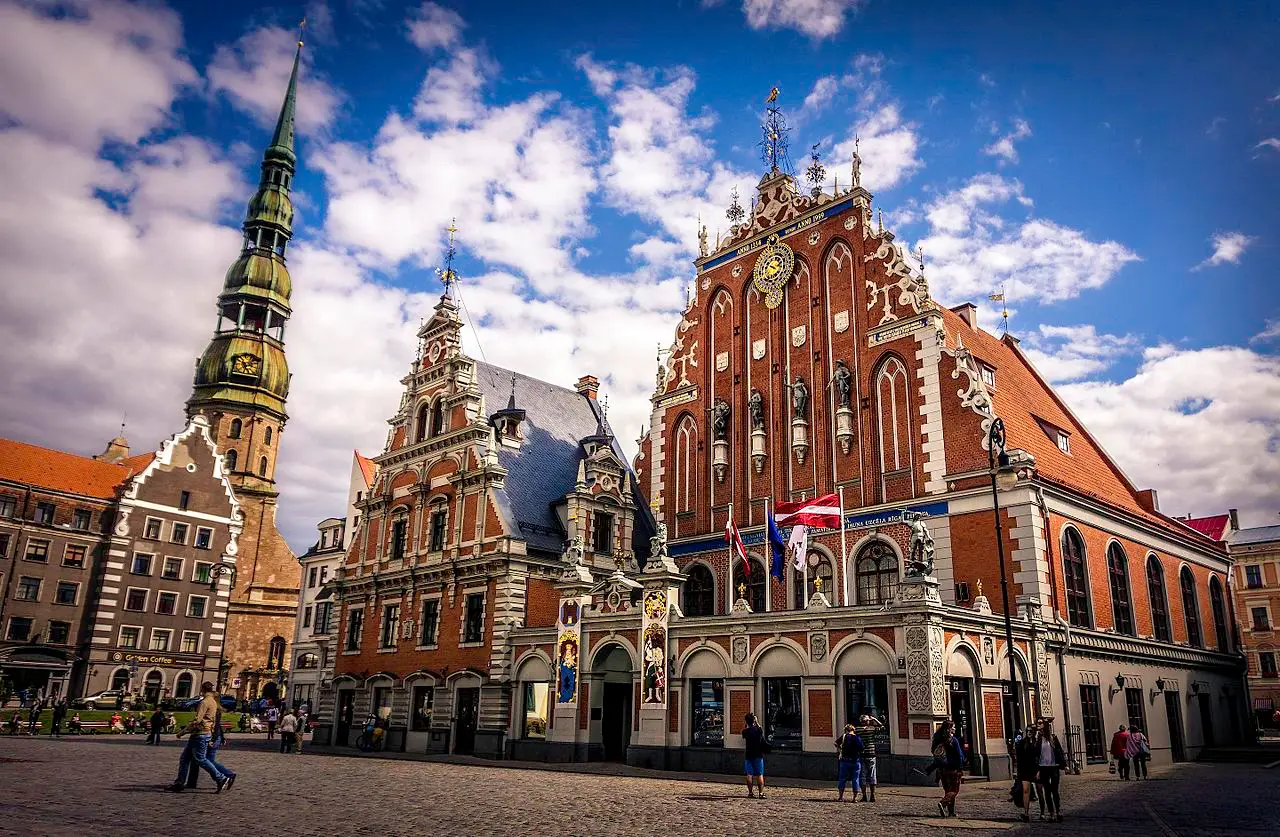
Riga is a genuine European capital, not a tax-residency mailbox. The Art Nouveau district holds one of the largest concentrations of that architecture anywhere in the world. Rental yields in the city have historically run higher than London or Paris, a fact worth stating plainly rather than dressing up: for an investor weighing the real estate route, the numbers matter more than the setting.
No route under the current program requires the investor to live in Latvia to maintain the permit itself, only to visit annually for card renewal. That changes the moment permanent residence or citizenship becomes the goal. We tell clients this distinction upfront, not after the fact.
Frequently Asked
Quick answers
Is the Latvia Golden Visa closing?
Not currently. A reform bill that would remove the real estate and bank deposit routes passed parliament in June 2026 but was returned by the President for further review and has not been enacted. All routes except government bonds remain legally open as of this update. We recommend confirming current status with our team before beginning an application, given the pending review.
What is the minimum investment?
EUR 50,000 into the share capital of a qualifying small Latvian company, plus a EUR 10,000 state payment. EUR 100,000 for larger companies. Real estate starts at EUR 250,000 plus a 5% state fee; bank deposit at EUR 280,000 plus a EUR 25,000 state fee, though see the practical-processing note above for that route.
How much do I need to show in my own bank account, separate from the investment?
OCMA sets a monthly subsistence rate rather than a single flat figure, and it resets periodically. As of OCMA's 1 April 2026 update, the rate is approximately EUR 780 per month for the main applicant on the business route, and approximately EUR 2,340 per month on the real estate route, with roughly EUR 234 per month for a minor child and a separate figure for a spouse. These translate to minimum account balances in the region of EUR 8,880 for the business route and EUR 26,640 for real estate, though we confirm the exact current figure with OCMA before every filing rather than rely on a fixed number.
Do I have to live in Latvia?
Not to maintain the temporary permit itself. An annual visit is required to renew the residence card. Permanent residence, by contrast, requires actual physical presence for at least four of the first five years, plus a Latvian A2 language test.
Can my family apply with me?
Yes. A spouse and dependent children under 18 can be included on the same application, each with their own supporting documents and subsistence figures.
Are Russian or Belarusian citizens eligible?
No, with narrow discretionary exceptions under the pending law tied to international legal obligations or humanitarian grounds, decided case by case through the interior ministry rather than the standard investment route.
Latest News & Program Updates
Programme updates
- 2 Sep 2026 — Guide published. All routes except government bonds remain active under current law; pending reform not yet enacted. (Lincoln Global Partners)
- 19 Jun 2026 — President Rinkēvičs returned the new Immigration Law to the Saeima for a second review, specifically over the investment-residence provisions. (president.lv)
- 11 Jun 2026 — Saeima passed a new Immigration Law that would remove the real estate and bank deposit routes and introduce a EUR 150,000 State Investment Fund route. Not yet in force. (IMI Daily, Saeima)
- 27 Apr 2026 — Latvian state broadcaster LSM reported OCMA already declining new applications under the bank deposit route in practice. (LSM.lv)
- 20 May 2026 — Government bond route formally removed; Section 23(1)(31) of the Immigration Law repealed. (IMI Daily)

Last reviewed 2 September 2026.
This guide is general information, not legal, tax or immigration advice. Programme terms are set by the relevant government and can change; confirm any figure with the authority, or with us, before acting on it.