




























Overview
What Nauru citizenship by investment offers
Nauru grants citizenship to investors who make a non-refundable contribution to its Treasury Fund under the Economic and Climate Resilience Citizenship Act 2024. The contribution is normally US$115,000 and is discounted to US$90,000 until 31 December 2026 under a promotion called the Iruwa Initiative. All-in cost for one applicant lands between US$100,500 and US$102,700 depending on which fees an agent includes. Processing takes three to five months, no visit is required, and the money funds climate relocation work on an island where phosphate mining has already made most of the interior uninhabitable.
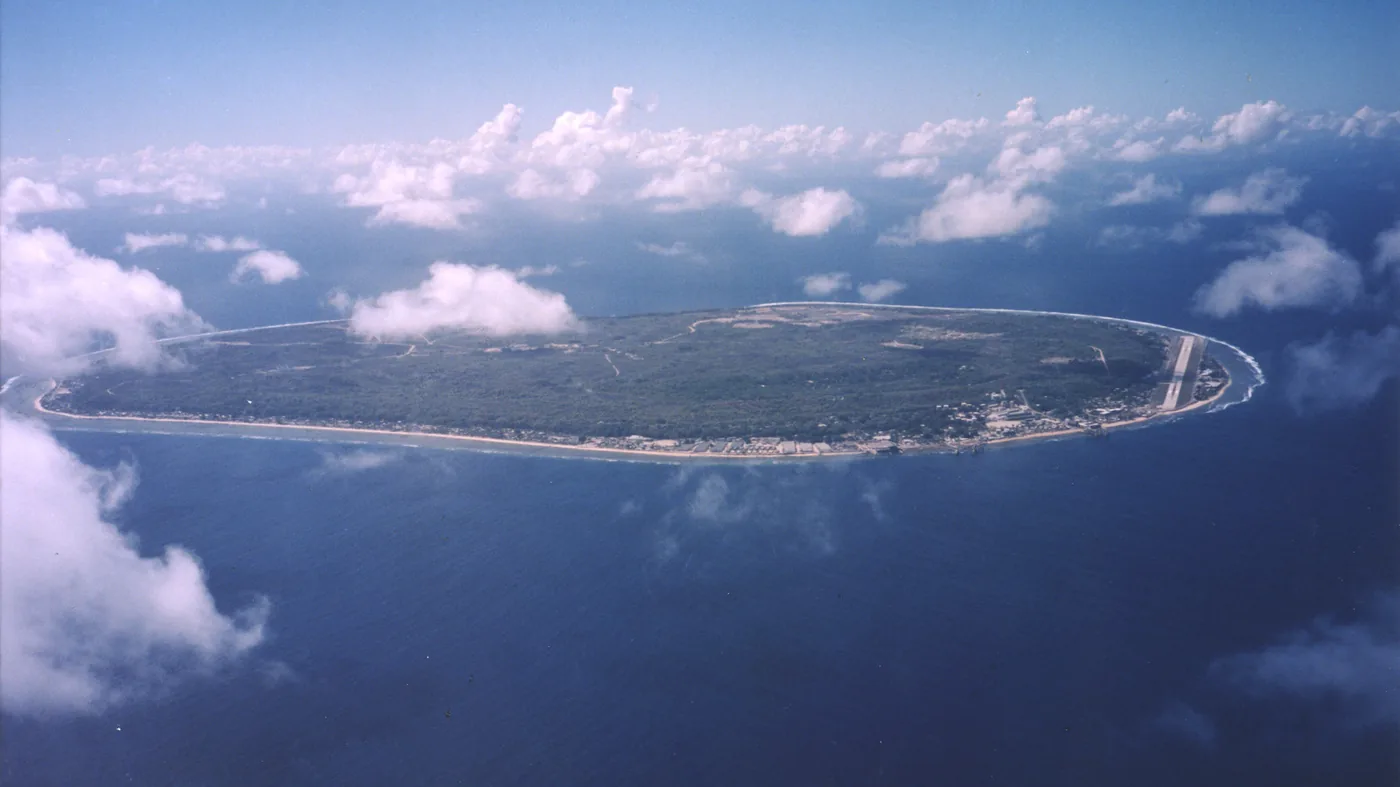
Nauru is the smallest republic in the world: 21 square kilometres of raised coral in the central Pacific, a population of roughly twelve thousand, and an economy that has been searching for a replacement industry since its phosphate ran out. It is also the only citizenship programme in the world that frames itself as climate finance. The contributions are earmarked for the Higher Ground Initiative, a decades-long plan to move the island's population off the vulnerable coastal strip and onto the mined-out plateau inland.
That framing is unusual enough to be worth taking seriously rather than dismissing as positioning. Most donation programmes route money into a general development fund and leave you to guess where it lands. Nauru has a specific, documented, physically obvious problem, and the connection between your contribution and the response to it is easier to trace than in most of the market.
Set against that, the practical case is narrower than the marketing suggests. The passport reaches roughly 86 destinations and does not include the Schengen area, the United States, or the United Kingdom, which withdrew visa-free access from Nauru in December 2025 in direct response to this programme. The country has sold passports before, in the 1990s and early 2000s, and that scheme collapsed in scandal. Anyone considering Nauru needs both halves of that picture, and we set out the second half at length in the risks section below.
What remains after all of that is a real product with a real use. It is cheap, it is fast, it is administered under a purpose-built statute rather than a discretionary power, it accepts dependants of any age including siblings and parents, it recognises unmarried partners, and it will consider stateless applicants. For a specific kind of buyer, that combination is difficult to find anywhere else at this price.
Key takeaways
- The discount is real and dated. US$90,000 rather than US$115,000, a saving of US$25,000 on the contribution, available for applications accepted on or before 31 December 2026.
- It has already been extended once. The window opened on 29 January 2026 and was due to close on 30 June. A Program Office circular dated 15 June 2026 moved the closing date to 31 December. It may be extended again. It may not.
- Budget the total, not the headline. Contribution, application fee, due diligence, passport fee and bank charges bring a single applicant to roughly US$101,500 before any adviser fee.
- Statutory footing. The programme runs under its own act of parliament, which is a stronger legal foundation than several competing new programmes.
- An interview is mandatory. Unlike most donation programmes, every principal applicant is interviewed, virtually or in person.
- The passport is mid-table and getting scrutiny. Roughly 86 destinations, no Schengen, no United States, and no United Kingdom since 9 December 2025.
- Family rules are exceptionally open. Age caps for children and parents were removed, the marriage restriction on children and siblings was dropped, and de facto couples may apply together.
A closing price window is a reason to move quickly, not a reason to skip the diligence. The clients who regret these decisions are almost always the ones who let a deadline do their thinking for them.
David Lincoln, Founder & CEO, Lincoln Global Partners
Status
Where the programme stands in 2026
Open, operating and repricing. Nauru announced the programme at COP29 in Baku in November 2024 and launched it on 21 January 2025 at US$105,000 for a single applicant. In February 2026 it restructured to a flat US$115,000 for singles and families alike, cut its fees, widened the family definition, and simultaneously opened the discounted US$90,000 Iruwa window. That window now runs to 31 December 2026.
The price history, which tells you something
Read the sequence rather than the current number. The programme opened in January 2025 at US$105,000. In December 2025 the United Kingdom withdrew visa-free access from Nauruan passport holders, citing this programme by name. Seven weeks later, at the end of January 2026, Nauru restructured: a flat contribution, materially reduced application and due diligence fees, dependants freed from age caps, and a promotional rate of US$90,000. In June 2026, two weeks before that promotion was due to expire, it was extended by six months.
We are not going to tell you what to conclude from that, because we do not have the Program Office's internal numbers and neither does anyone else writing about this programme. What we will say is that a discount which gets extended is behaving like a demand measure rather than a scarcity measure, and that a buyer should price the asset on its merits rather than on the fear of missing a promotion.
The legal and administrative framework
This is where Nauru is clearly stronger than several of its new competitors. The programme was created by the Nauru Economic and Climate Resilience Citizenship Act 2024, Act No. 15 of 2024. It is a purpose-built statute passed by parliament, not a regulation made under a general ministerial or presidential discretion. Citizenship granted under it is ordinary Nauruan citizenship.
Administration sits with the Nauru Program Office, which processes applications, conducts due diligence and issues certificates and passports. Applications cannot be submitted directly by an applicant: they must come through an agent accredited by the Program Office. Due diligence runs in tiers and draws on the Nauru Police Force and independent international investigative firms. Every principal applicant attends an interview. The Program Office then makes a recommendation, and the final decision rests with the Minister and Cabinet.
Two named individuals are worth knowing because they front the programme publicly: Edward Clark, its chief executive, and Isa Seow, its director of compliance. Clark signed the circular extending the discount window and led the public defence of the programme after the United Kingdom's decision.
Is the window worth acting on in your case?
The answer turns on what you already hold and what you need the document to do. Twenty minutes is usually enough to establish both.
Benefits
What you get, in order of real-world value
Speed, price while the window is open, a statutory foundation, exceptionally broad family inclusion, no residence or visit requirement, dual citizenship, a tax regime with no worldwide income tax, and Commonwealth membership. Broad visa-free travel is not on the list.
Price, for as long as it holds
US$90,000 rather than US$115,000 puts Nauru level with São Tomé and Príncipe at the bottom of the market, with a materially stronger passport than either São Tomé or Sierra Leone. That combination does not usually exist at this price and it is the single best argument for acting inside the window.
Three to five months
From engagement of an accredited agent to passport in hand. The Caribbean programmes take six to nine months and Malta takes years. If your reason for buying has a timeline attached, this matters more than the fee schedule.
A statute, not a discretion
The Economic and Climate Resilience Citizenship Act 2024 was passed by the Nauruan parliament specifically to create this route. Compare that with programmes operating under general executive powers, where the framework can be rewritten without going near a legislature.
Family rules with the caps removed
Children and parents qualify with no age limit. The requirement that children and siblings be unmarried was dropped. Siblings qualify. Grandparents qualify. Couples in long-term de facto or common-law relationships may apply together, which is close to unique in this industry.
No residence, no visit
Nothing is required before, during or after. The interview is conducted virtually where the applicant prefers. Citizenship is for life and carries no renewal contribution or physical presence obligation.
Dual citizenship recognised
Nauru does not require you to renounce anything. Whether your own country permits a second nationality is governed by its law rather than Nauru's, and that question sits with you and your own adviser.
A straightforward tax position
Nauru does not levy tax on worldwide personal income, capital gains, inheritance or wealth. Citizenship by itself does not make you tax resident anywhere, and it will not displace your existing tax residence. Treat this as an absence of additional burden rather than as a plan.
Commonwealth membership
Nauru is a member of the Commonwealth and of the United Nations, and uses the Australian dollar. None of that translates into travel rights, but it does place the citizenship inside recognised international structures rather than outside them.
The window
The Iruwa Initiative: US$90,000 until 31 December 2026
The Iruwa Initiative is a designated special project under the Nauru programme that reduces the principal applicant's contribution from US$115,000 to US$90,000. It opened on 29 January 2026, was due to close on 30 June 2026, and was extended to 31 December 2026 by a Program Office circular dated 15 June 2026. Applications accepted on or before the closing date qualify for the discounted rate, and files already submitted continue under the terms they were submitted on.
The saving is US$25,000 on the contribution alone. Because the February 2026 restructure also cut the application and due diligence fees on a permanent basis, the all-in reduction against the pre-2026 position is larger than the headline: agents were quoting savings of roughly a fifth for a single applicant and a quarter for a family of four.
The window as published, counted to 31 December 2026
Counted from today against the closing date published by the Nauru Program Office. This is a published deadline, not a marketing device, and it has already been moved once. Confirm the current position in writing before you rely on it.
How the price got here
-
November 2024 · announced
Launched at COP29 in Baku
Nauru unveiled the Economic and Climate Resilience Citizenship Program at the United Nations climate conference, framing it as climate finance for the Higher Ground Initiative. The enabling statute, Act No. 15 of 2024, was already in place.
-
21 January 2025 · opened
Applications opened at US$105,000
The original structure was tiered by family size, starting at US$105,000 for a single applicant. Early uptake was modest: press reporting in February 2025 put approvals in the first weeks at six.
-
9 December 2025 · setback
The United Kingdom withdraws visa-free access
Effective at 15:00 GMT, Nauru nationals lost eligibility for a UK electronic travel authorisation and became subject to visit visa requirements. The written ministerial statement named this programme as the reason. We deal with this in full in the risks section.
-
29 January 2026 · repriced
Flat US$115,000, lower fees, and the Iruwa discount
The tiered structure was replaced by a flat US$115,000 for a single applicant or a family. Due diligence fees fell from US$10,000 to US$6,000 for the principal and from US$7,500 to US$3,000 per dependant, permanently. Age caps on children and parents were removed. The Iruwa Initiative set the principal contribution at US$90,000.
-
15 June 2026 · extended
Window moved from 30 June to 31 December 2026
A circular from the Program Office, signed by chief executive Edward Clark, extended the discounted structure by six months. Applications already in train continued without disruption.
What the discount does give you
US$25,000 off the contribution and permanently lower fees, which together make Nauru the cheapest citizenship in the world with a passport above the eighty-destination mark. If you have already decided that Nauru suits your circumstances, applying inside the window rather than after it is straightforwardly better, and the arithmetic is not complicated.
What it does not tell you
A discount is not a valuation. The window opened seven weeks after the United Kingdom withdrew visa-free access and has since been extended once, which is consistent with a programme working to sustain demand. Nothing about the price makes the underlying risks smaller, and a cheaper entry into a programme facing external scrutiny is still an entry into a programme facing external scrutiny.
The deadline is real
This is a published closing date issued by the programme's own office in a dated circular, not a fabricated urgency device. If it passes without extension, the contribution returns to US$115,000 and a single applicant pays roughly US$25,000 more for the identical outcome.
The deadline is also soft
It has already moved once, by six months, two weeks before it was due to bite. Anyone telling you this is a final, immovable cut-off is guessing. Move quickly because the economics favour it, not because you have been told the door is closing for ever.
What the window is worth in cash
| Application | Inside the window | After 31 December 2026 | Difference |
|---|---|---|---|
| Single applicant, contribution only | US$90,000 | US$115,000 | US$25,000 |
| Single applicant, all in | circa US$101,500 | circa US$126,500 | US$25,000 |
| Couple, all in | circa US$109,000 | circa US$134,000 | US$25,000 |
| Family of four, two children under 16, all in | circa US$114,000 | circa US$139,000 | US$25,000 |
The discount applies to the principal applicant's contribution, so the cash saving is the same US$25,000 whatever the size of the application. All-in figures are derived from published component fees and exclude adviser fees. Agents quote single-applicant totals between US$100,500 and US$102,700 depending on whether bank charges and courier costs are included.
Discounts in this industry are information. They tell you what the seller thinks demand looks like. That does not make them a bad deal, but it does mean you should read the reason as carefully as the price.
Peter Lilliott, Co-Founder & Partner
Cost
Nauru citizenship by investment cost in 2026
A single applicant pays a US$90,000 contribution inside the Iruwa window, plus a US$5,000 application fee, US$6,000 due diligence and a passport fee of around US$500, which comes to roughly US$101,500 before adviser fees. Each dependant aged 16 or over adds around US$7,500 in government charges, each child under 16 around US$2,500, and each sibling carries an additional US$15,000 contribution on top.
Nauru's fee structure is more granular than most donation programmes, which cuts both ways. It means the published contribution is a long way from the number you will end up paying, so a quotation of US$90,000 is incomplete. It also means large applications are priced per head rather than by tier, so the arithmetic rewards attention.
One structural point worth understanding: the discount attaches to the principal applicant's contribution only. Dependants were never charged the full contribution, so adding people to your file costs the same inside the window as outside it. The US$25,000 saving is a fixed amount, not a percentage, which means it matters proportionally less the bigger your application gets.
Iruwa rate
US$90,000
Principal applicant contribution to the Treasury Fund for applications accepted on or before 31 December 2026. Non-refundable once approval is granted.
After the window
US$115,000
The flat contribution set in the February 2026 restructure, applying to a single applicant or a family alike. Some agent sites still quote the superseded launch figure of US$105,000.
The full fee schedule
| Item | Amount (USD) | Notes |
|---|---|---|
| Contribution, principal, Iruwa rate | 90,000 | Applications accepted on or before 31 December 2026 |
| Contribution, principal, standard rate | 115,000 | Flat rate since the February 2026 restructure |
| Contribution, dependant aged 16 or over | 2,000 each | Spouse, child, parent, grandparent or qualifying dependant |
| Contribution, sibling | 15,000 additional | On top of the standard dependant charges |
| Application fee, principal | 5,000 | Payable on submission |
| Application fee, each dependant | 2,000 | Payable on submission |
| Due diligence, principal | 6,000 | Reduced from 10,000 in February 2026, permanently |
| Due diligence, each dependant aged 16 or over | 3,000 | Reduced from 7,500 in February 2026, permanently |
| Passport fee | circa 500 per person | Ten year validity, five years under 16 and over 75 |
| Bank due diligence | circa 2,200 (reported) | Single-source figure. Verify with your agent |
| Typical total, single applicant | circa 101,500 | Agents quote between 100,500 and 102,700 depending on inclusions. Excludes adviser fees |
Schedule as published at 27 July 2026. Per-head totals for dependants are derived from these components rather than published as single figures. Adviser and professional fees sit outside the government schedule and vary between agents.
Build your own number
The calculator applies the published components and shows the effect of the window. Switch the rate to see what the same application costs after 31 December 2026.
Total government cost by application shape
$101,500 per person
Inside the Iruwa window you save $25,000 against the standard rate.
Government schedule only. Excludes adviser fees, bank due diligence, courier, apostille and translation, and any home-country tax consequences.
Family
Who you can include, now that the caps are gone
Spouse, children of any age, parents of any age, grandparents and siblings. The February 2026 changes removed age limits for children and parents entirely and dropped the requirement that children and siblings be unmarried. Couples in long-term de facto or common-law relationships may apply together, which almost no other programme permits. Each dependant aged 16 or over costs around US$7,500 in government charges, each child under 16 around US$2,500, and siblings carry an extra US$15,000 contribution.
Nauru's family rules changed more than its price did in February 2026, and for some applicants that is the more significant development. Removing age caps on children and parents means an adult child of 35 or a parent of 80 qualifies on the same basis as a minor. Dropping the marriage restriction means a married adult child or a married sibling is no longer excluded.
The de facto provision deserves particular attention. Most citizenship programmes recognise only marriage, which leaves unmarried long-term partners either excluded or forced into separate applications at full price. Nauru will consider couples in established common-law relationships as joint applicants. For same-sex couples from jurisdictions where marriage is unavailable, and for long-term unmarried partners generally, that is a substantive difference rather than a technicality.
| Category | Who qualifies | Government cost each, derived |
|---|---|---|
| Spouse or de facto partner | Married spouse, or partner in a long-term de facto or common-law relationship. | circa US$7,500 |
| Children | Any age, married or unmarried. Under 16 attracts neither the dependant contribution nor a due diligence fee. | circa US$2,500 under 16, circa US$7,500 at 16 and over |
| Parents and grandparents | Any age, no dependency test published. | circa US$7,500 |
| Siblings | Any age, married or unmarried, with an additional contribution. | circa US$22,500 |
Two worked examples
A couple applying inside the window pays the US$90,000 contribution, US$5,000 and US$6,000 for the principal's application and due diligence fees, US$2,000 of contribution for the spouse, US$2,000 application fee and US$3,000 due diligence for the spouse, and two passport fees. That is roughly US$109,000 for two people, or about US$54,500 each.
A family of four with two children under 16 comes to roughly US$114,000, which is about US$28,500 per person. Add a parent and a sibling and the file reaches roughly US$144,000 for six, or about US$24,000 each. The per-head figure keeps falling as the application grows, because the discounted element is fixed and everything else is priced per person at modest rates.
Requirements
Eligibility, documentation and the interview
You must be 18 or over, of good character with no criminal record, able to document the lawful source of your funds, and able to pass tiered due diligence that includes checks by the Nauru Police Force and independent international investigators. Every principal applicant must attend an interview, conducted virtually or in person. There is no language test, no education requirement and no obligation to visit or reside in Nauru. Russian nationals are reported to be excluded.
Nauru screens harder than its price suggests, and the interview is the clearest signal of that. Most donation programmes at this level are entirely documentary: you file, an investigator writes a report, a committee decides. Requiring the principal applicant to sit an interview, even a virtual one, changes the character of the process. It is a deliberate response to the programme's own history, and to the criticism that followed the United Kingdom's decision.
Core requirements
- Aged 18 or over for the principal applicant
- Good character, with no criminal record
- Valid passport and civil documents, certified
- Police clearance from countries of nationality and residence
- Documented lawful source of the contribution
- Clean sanctions and politically exposed person screening
- Mandatory interview, virtual or in person
- Oath of Allegiance to Nauru on approval
Points specific to this programme
- Accredited agents only. The Program Office does not accept applications submitted directly by an applicant
- Tiered due diligence. Screening runs in stages and draws on the Nauru Police Force and independent international firms
- Cabinet decides. The Program Office recommends, and the final grant rests with the Minister and Cabinet
- Translations. Documents requiring translation must be handled by accredited translators to the programme's published schedule
- Russian nationals. Reported as excluded from the programme. Single secondary source, confirm before assuming either way
- Stateless applicants. May be considered, which is unusual, though the process is harder and no outcome is assured
Process
The application process, step by step
Six stages over three to five months: engage an accredited agent, submit the file with application and due diligence fees paid, clear tiered due diligence, sit the interview, receive approval in principle and pay the contribution, then take the Oath of Allegiance and receive the certificate of citizenship and passport by courier.
-
Stage one · weeks 1 to 2
Engage an accredited agent and assemble the file
Applications reach the Program Office only through an accredited agent, so this step is not optional. Documents are collected, certified and translated where required. A complete file at submission is the single biggest determinant of whether the published timeline holds.
-
Stage two · weeks 2 to 3
Submission and first payment
The agent submits the package to the Program Office. Application fees, due diligence fees and bank due diligence charges are invoiced at this point. The contribution itself is not yet payable.
-
Stage three · weeks 3 to 10
Tiered due diligence
Security verification, background checks through the Nauru Police Force, and independent international investigation covering sanctions, politically exposed person status, litigation, corporate records and open sources. This is the stage at which applications fail.
-
Stage four · during due diligence
The interview
Every principal applicant is interviewed, virtually or in person at an approved location. Expect questions on source of funds, business background and your reasons for applying. Preparation matters, and a good agent will run you through it in advance.
-
Stage five · weeks 10 to 16
Recommendation, approval and contribution
The Program Office submits a recommendation to the Minister and Cabinet, which makes the final decision. On approval in principle the contribution to the Treasury Fund becomes payable.
-
Stage six · weeks 14 to 22
Oath, certificate and passport
The Oath of Allegiance is administered, the certificate of citizenship is issued and the Nauruan passport is produced and couriered. Adult passports are valid for ten years, five years for under-16s and those over 75.
We quote clients four to six months rather than three to five. The published range assumes a clean file, a responsive applicant and no queue at the Cabinet stage, and a programme running a discount window may be handling more volume than usual as the closing date approaches. If your reason for applying has a hard date attached, build a buffer, and do not leave submission until December.
Funding
Source of funds and how the money moves
Application and due diligence fees are paid on submission and are not refundable if the application fails. The contribution to the Treasury Fund is only payable after approval in principle, which means the sum at risk during assessment is the fee package rather than the contribution. Source of funds must be documented and is examined as part of tiered due diligence.
The payment sequencing is a genuine protection and works differently from an escrow model. Rather than holding your contribution while the file is assessed, Nauru does not ask for it until it has decided to approve you. The practical effect is similar: your exposure during due diligence is limited to the fees. The difference is that there is no escrow agreement to negotiate and no third-party holder to satisfy yourself about.
What you will be asked to evidence is conventional for the industry. The investigator wants a coherent documentary trail from the origin of the wealth to the account the payment will come from:
- Business or employment income: audited or management accounts, tax filings, contracts of employment, dividend resolutions, and bank statements showing accumulation over time.
- Sale of an asset: the contract, evidence of prior ownership, the completion statement and receipt of the proceeds.
- Investment gains: broker or custodian statements covering the holding period, with acquisition cost visible.
- Inheritance or gift: will, grant of probate or deed of gift, plus evidence of the donor's own source of wealth where the amount is material.
- Corporate distributions: the ownership chain up to beneficial ownership, since the investigator will want to identify who ultimately controls the paying entity.
Two practical notes. Cryptocurrency-derived wealth invites additional scrutiny of on-chain provenance and exchange records regardless of how the payment is finally made. And because this programme interviews its principal applicants, your source of funds narrative needs to be one you can explain out loud, consistently, without reference to the file. That is a higher bar than a paper application and it catches people out.
Mobility
How strong is the Nauru passport?
Mid-table, and narrower than it was a year ago. The Henley Passport Index puts Nauru at roughly 86 destinations visa-free or visa on arrival, with the rank quoted between 52nd and 60th depending on the index and the month. It does not include the Schengen area, the United States or Canada, and it has not included the United Kingdom since 9 December 2025. It does include Singapore, Hong Kong, the United Arab Emirates, Russia and much of the Commonwealth, Caribbean and Pacific.
Eighty-six destinations is a real number and a useful one. It is meaningfully better than São Tomé at around 63 or Sierra Leone at around 62, and it is the main reason Nauru is worth comparing with programmes costing twice as much. Singapore, Hong Kong and the United Arab Emirates are of real value to a business traveller, and the Commonwealth block covers a lot of ground.
What it is not is a European access instrument. The Schengen area requires a visa. The United States requires a visa. Canada requires a visa. And the United Kingdom, which did not require one until the end of last year, now does. Nauru nationals need visitor visas and Direct Airside Transit Visas for the United Kingdom, and are no longer eligible for an electronic travel authorisation. We set out how and why that changed in the risks section, because the reasoning matters as much as the fact.
Be careful with the numbers you see elsewhere. Counts above 100 are produced by adding electronic visas and travel authorisations to the visa-free and visa-on-arrival totals, which is a legitimate methodology but not what most readers understand by visa-free. One page we reviewed advertises 119. Some sources still list the United Kingdom as open. Mobility indices also list Ireland as visa-free, and given the United Kingdom's decision we would verify that directly before booking anything.
Nauru against the programmes clients weigh alongside it
Destination counts follow the Henley Passport Index and vary by index and month. Bars are comparative, not precise.
Struck through: visa required. The United Kingdom moved into that column on 9 December 2025.
Comparison
Nauru compared with the other low-cost citizenships
Inside the window Nauru matches São Tomé on price at US$90,000 while offering a passport roughly 23 destinations stronger, which makes it the best value at the bottom of the market on a single-applicant basis. Against Vanuatu it is cheaper, faster and stronger. Against the Caribbean it is roughly half the price with about half the travel access. Against Malta it is not a comparison.
| Programme | From, single | Timeline | Visa-free, approx. | Schengen | Legal footing |
|---|---|---|---|---|---|
| Nauru | US$90k to 31 Dec 2026, then US$115k | 3 to 5 months | 86 | No | Purpose-built act, 2024 |
| São Tomé & Príncipe | US$90k, US$95k with fees | circa 75 days | circa 63 | No | Decree-law, 2025 |
| Sierra Leone | US$100k heritage, US$140k standard | 60 to 90 days | circa 62 | No | Regulation under a 1973 act |
| Vanuatu | circa US$130k | 2 to 3 months | circa 90 | Suspended by the EU in 2024 | Established |
| Dominica | US$200k | 6 to 9 months | circa 140 | Yes | Long established |
| St Kitts & Nevis | US$250k | 4 to 8 months | circa 155 | Yes | Oldest programme, 1984 |
| Malta | circa €690k | 12 to 36 months | circa 185 | Yes, as an EU member | Established, under EU challenge |
Indicative figures at July 2026. Nauru's US$90,000 is promotional and scheduled to revert to US$115,000 after 31 December 2026. Nothing here is an offer.
The closest peers: São Tomé and Vanuatu
São Tomé and Príncipe is the direct price competitor. Both are US$90,000 at entry, both are new, both are small island states, both process remotely in months rather than years. Nauru wins clearly on passport strength, at roughly 86 destinations against 63, and on legal foundation, with a purpose-built act against a decree-law. São Tomé wins on family pricing, since it covers two to four people inside one contribution, and on the Lusophone community route toward Portugal and Brazil, which for some clients is worth more than any of it. São Tomé has also not had a Western government withdraw visa-free access from it.
Vanuatu is the cautionary comparison rather than the competitor. It is the Pacific programme Nauru is often measured against, it is more expensive at around US$130,000, and it lost its European Union visa waiver permanently in November 2024 after years of pressure over due diligence standards. Nauru is cheaper, faster and now roughly comparable on mobility precisely because Vanuatu lost the Schengen access that used to distinguish it. That is the clearest illustration available of what external scrutiny does to the value of one of these passports, and it happened to the programme next door.
If you want European access, none of these three delivers it and you should be looking at the Caribbean programmes or at a residence route such as the Portugal Golden Visa or the Greece Golden Visa. If you want the lowest per-head cost for a nuclear family, look at São Tomé and Príncipe. If you want West African market access, look at Sierra Leone.
Value
Is the discount worth acting on?
Yes, if you have already concluded that Nauru suits you. US$25,000 for the same outcome is a straightforward saving and there is no advantage to waiting. No, if the discount is the reason you are considering Nauru at all. A price cut on an asset facing external scrutiny is not the same as an improvement in the asset.
On cost per destination, Nauru inside the window is the strongest entry at the bottom of the market. Roughly US$1,180 per visa-free destination, against about US$1,510 for São Tomé, US$1,440 for Vanuatu, US$1,430 for Dominica and US$2,260 for Sierra Leone. On that single measure, Nauru at US$90,000 is the best value citizenship available anywhere.
On cost per unit of durability, it looks weaker, and this is the trade a buyer has to make consciously. The United Kingdom has already acted. The European Union finalised a visa suspension mechanism in June 2025 aimed specifically at programmes lacking genuine ties between investor and country, and Nauru has no Schengen access to lose but does have other arrangements that could be reviewed. A passport worth 86 destinations today is not guaranteed to be worth 86 destinations in three years, and the precedent next door in Vanuatu shows how quickly that arithmetic can change.
On cost per unit of optionality, which is how our family-office clients think about these decisions, Nauru is a reasonable holding. It is cheap, it is inheritable, it carries no maintenance obligation, and it is uncorrelated with the Caribbean and European programmes most wealthy families already hold. The climate exposure is real but slow, and a citizenship does not evaporate because an island floods: it becomes a claim on a sovereign that continues to exist in international law. That is an uncomfortable thought and it is also the honest analysis.
Good value if
You want the strongest passport available under US$100,000. You need a second document inside six months. You have dependants who fall outside conventional definitions, particularly adult children, parents, siblings or an unmarried partner. You are adding an uncorrelated status to an existing portfolio and are indifferent to European access. You value a statutory framework over a discretionary one.
Poor value if
You need Schengen, United Kingdom or United States access. This would be your only second citizenship and you need it to hold its value for decades. You are buying because a deadline was put in front of you. You bank with institutions that will treat a new Pacific passport as a compliance problem. You want a programme with no reputational history to explain.
Where the money goes
The Higher Ground Initiative, and what your contribution funds
Contributions go to Nauru's Treasury Fund and are earmarked for the Higher Ground Initiative, a multi-decade plan to relocate the island's population from the low-lying coastal strip onto the interior plateau, together with renewable energy, infrastructure and biodiversity work. Nauru is the only citizenship programme in the world built explicitly as climate finance, and it announced the scheme at COP29 in Baku in November 2024.
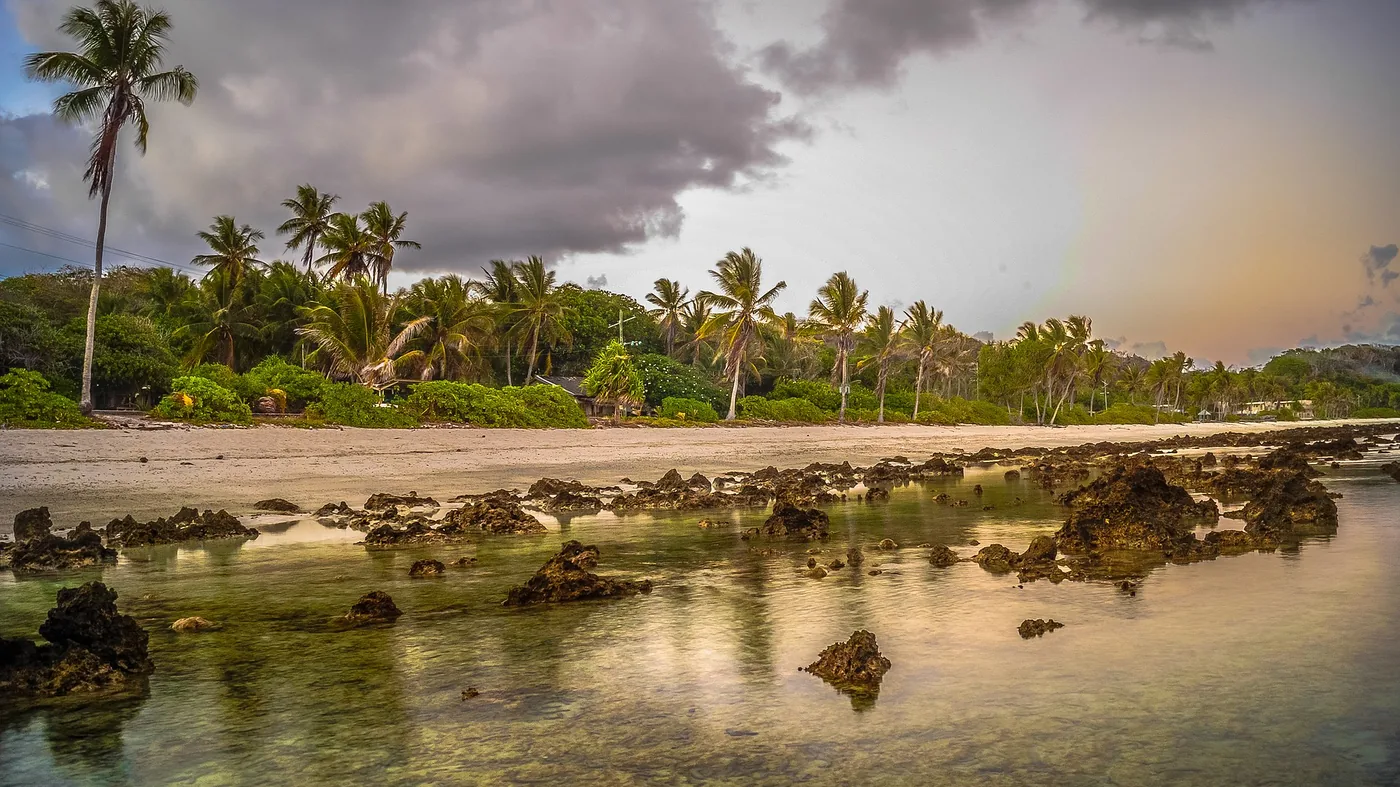
The physical situation is unusual and it explains the programme better than any brochure does. Nauru is 21 square kilometres of raised coral. Almost the entire population lives on a narrow coastal ring, because the interior, known locally as Topside, was strip-mined for phosphate through the twentieth century and left as a field of limestone pinnacles. Researchers estimate around 80 per cent of the island was rendered effectively uninhabitable by that mining. Meanwhile sea level rise, storm surge and coastal erosion are pressing on the inhabited ring.
So Nauru needs to move its people inland, onto land its own extraction industry destroyed, and it needs to rehabilitate that land first. That is the Higher Ground Initiative. It is a genuine, physical, decades-long infrastructure programme with a cost far beyond what an economy of twelve thousand people can generate, and the government has been explicit that citizenship revenue is a core funding mechanism for it.
Whether that makes the programme more attractive is a question about you rather than about Nauru. It does make the use of funds unusually traceable by the standards of this industry, where most donation routes disappear into a general development fund. It also gives the programme a defence that its competitors lack: the money is going somewhere visible, for a reason a reasonable person would accept.
It is worth being clear-eyed about the counter-argument too, because serious people make it. Critics point out that funding climate adaptation by selling identity documents to people with no connection to the country is a short-term expedient rather than a sustainable model, and that it exposes a country with a difficult financial history to a new set of integrity risks. One academic quoted in coverage of the launch described it as offering short-term relief but not a sustainable path. That view is reasonable and a buyer should hold it alongside the case for the programme.
Nauru in figures
- 21 square kilometres of land, making it the smallest independent republic in the world and the third smallest country by area.
- Roughly 12,000 people, almost all living on the coastal ring, with the capital at Yaren.
- Around 80 per cent of the island degraded by a century of phosphate extraction.
- The Australian dollar is the currency, which removes exchange risk for anyone already holding AUD.
- English is widely used in government and business alongside Nauruan.
- Commonwealth and United Nations member, with an independent legal system based on common law.
- Once the second wealthiest country per capita on earth, behind Saudi Arabia, on the strength of phosphate royalties in the 1970s.
Would anyone in fact live there?
Almost nobody who buys this citizenship intends to, and the programme imposes no obligation. There is one hotel of note, a single airport served by the national carrier, limited healthcare that requires medical evacuation for anything serious, and an economy running on fishing licences, Australian arrangements and now citizenship revenue. Nauru also hosts an Australian offshore immigration detention facility, which has drawn sustained international criticism and is part of the country's public profile whether or not it touches your application.
We include this because a citizenship is a relationship with a real place, and because clients occasionally ask whether they could go. You can. Very few do.
Optionality
Nauru as a plan B, and the case for uncorrelated status
Nauru's strategic value is that it fails differently from everything else in a typical portfolio. A family holding a Caribbean passport, a European residence permit and a Gulf residency has three statuses exposed to broadly the same set of Western policy decisions. Nauru sits outside that cluster. The counter-argument is that it has already suffered one such decision, from the United Kingdom, which shows the exposure is not zero.
The logic of a second or third citizenship is not that any one of them is excellent. It is that they do not all fail at once. That is why we push back when a client tells us they are diversified because they hold a Caribbean passport and a European golden visa: both of those depend on European goodwill, and the European Union has spent three years demonstrating that its goodwill on investment migration is finite.
Nauru is meaningfully uncorrelated with that cluster in the sense that its value does not rest on Schengen access, because it has none to lose. It is a Pacific document oriented toward Singapore, Hong Kong, the Gulf and the Commonwealth. If your concern is a disruption originating in Europe or North America, Nauru survives it in a way a Caribbean passport might not.
The honest qualification is that Nauru has already lost access once, to the United Kingdom, for reasons specific to this programme rather than to Nauru itself. So the correct framing is not that Nauru is immune to Western policy, but that it is exposed to a different and smaller part of it, because it had less to lose in the first place. For a buyer at US$90,000 adding a fourth status, that is a reasonable trade. For a buyer relying on it as their only alternative, it is not.
Ask which of your statuses fail together. If a single decision in Brussels or Washington damages all of them, you do not hold a portfolio, you hold one position in three currencies.
David Lincoln, Founder & CEO
By nationality
What applicants of each nationality should know
What differs by nationality is whether your own law permits a second citizenship, whether the Nauru passport improves on what you already hold, and what reporting follows at home. Russian nationals are reported to be excluded from the programme. For holders of strong Western passports Nauru adds almost no mobility and should be evaluated purely as a hedge.
India
Nauru offers real mobility gains against an Indian passport, particularly for Singapore, Hong Kong and the Commonwealth block. The obstacle is decisive: India does not permit dual citizenship, so acquiring Nauruan nationality means ceasing to be an Indian citizen, with Overseas Citizen of India status as the usual consolation. That is a serious and largely irreversible step. Most Indian nationals who look at this programme should be looking at a residence route instead.
China
Similar analysis. The mobility uplift is meaningful, especially Hong Kong and the Gulf, but China does not recognise dual nationality and acquiring a foreign citizenship can be treated as loss of Chinese nationality. Anyone in this position needs advice before filing rather than after, and should understand that the interview stage will ask about their intentions.
Pakistan and Bangladesh
Both permit dual nationality, Pakistan on a designated country list which should be checked against Nauru specifically. Both nationalities face heavy visa friction globally, and Nauru at 86 destinations is a substantial practical improvement on either. This is one of the constituencies for whom the arithmetic works best, provided the source of funds file is strong.
Nigeria, Ghana and West Africa
A significant mobility gain, and no dual nationality obstacle in Nigeria or Ghana. Applicants from this region should expect enhanced scrutiny at due diligence as a matter of course, which is a reason to prepare the source of funds documentation thoroughly rather than a reason to avoid the programme.
Russia and Belarus
Russian nationals are reported to be excluded from this programme, a restriction introduced when it launched. That report rests on a single secondary source and may have changed, so it should be confirmed directly before any work is done. Separately, applicants connected to sanctioned jurisdictions face intense due diligence, and a second passport does not resolve sanctions exposure.
United Kingdom
There is a particular irony for British applicants: your own government withdrew visa-free access from Nauru in December 2025 because of this programme. A British passport already provides far more mobility than a Nauruan one, so the purchase is purely a hedge against future disruption to British status. Dual nationality is permitted without restriction. Evaluate it as insurance, not as travel.
United States
Dual nationality is permitted. Two cautions apply. American citizens are taxed on worldwide income regardless of any other nationality, so nothing here changes a United States tax position, and renouncing carries an exit tax regime that requires specialist advice. Nauru adds no meaningful mobility to a United States passport. The case, if there is one, is diversification.
Turkey and the Gulf
Turkish nationals may hold dual citizenship and gain modest mobility. Nationals of most Gulf states face restrictions ranging from official discouragement to automatic loss of nationality, so Gulf applicants should establish their position before proceeding. Note that the United Arab Emirates is visa-free on a Nauruan passport, which is useful for residents of the region who hold weaker nationalities.
Vietnam, Indonesia and Southeast Asia
Vietnam and Indonesia both restrict dual nationality, so check carefully. For those who can proceed, Nauru's regional access to Singapore and Hong Kong is directly useful, and the Pacific orientation of the document fits the region better than a Caribbean passport would.
Stateless and undocumented applicants
Nauru will consider applications from stateless people, which is rare and worth noting. The process is harder, requires more documentary creativity, and carries no assurance of success. If you are in this position, take advice from someone who has run such a file before rather than assuming the published process applies unchanged.
Demand
Who is buying Nauruan citizenship
Volumes appear to be low. Press reporting in February 2025, a few weeks after launch, put approvals at six. No audited cumulative figure has been published since. Enquiries cluster around holders of weaker passports seeking a genuine mobility upgrade, families with dependants who fall outside conventional definitions, and portfolio buyers adding a low-cost uncorrelated status.
We are cautious about characterising demand for a programme that does not publish approval statistics. The only hard number in the public domain is the early one, and six approvals in the opening weeks of a programme tells you very little except that it started slowly. Since then the February 2026 repricing and the discount extension suggest the government wanted more volume than it was getting, which is a reasonable inference rather than a fact.
What we see in our own pipeline is that Nauru enquiries divide cleanly. About half come from people holding passports in the 30 to 55 destination range, for whom 86 destinations including Singapore, Hong Kong and the Emirates is a material change in how they can operate. The other half come from people who already hold something strong and are buying a hedge, usually as a third or fourth status, usually with the sentence "in case something changes at home" somewhere in the first conversation.
The family rules are pulling in a third group that did not exist before February 2026: applicants with adult children, elderly parents, siblings or unmarried partners who were quoted impossible numbers elsewhere. For those files the removal of age caps matters more than the discount does.
Verdict
Is Nauru citizenship by investment worth it?
Inside the window it is the best-value citizenship in the world for a single applicant who does not need European or American access: 86 destinations for US$90,000, on a statutory footing, in three to five months. It is a poor choice as anyone's only second citizenship, because a programme that has already cost its citizens visa-free access to one major economy may cost them more.
Our house position on new programmes is that they belong in a portfolio rather than at the centre of a plan, and Nauru is a good example of why. The product is competent. The statute is real, the due diligence is more serious than the price implies, the interview requirement is a mark in its favour, and the family rules are the most generous in the industry. None of that protects you from the decisions other governments make about the document.
Apply if you can tick most of these
- You hold a passport in the 30 to 60 destination range and 86 would change how you operate.
- You need Singapore, Hong Kong, the Emirates or the Commonwealth block rather than Europe.
- You want a second status inside six months.
- You have dependants who fall outside conventional definitions: adult children, parents, siblings, an unmarried partner.
- This is an additional status rather than your only one.
- Your own nationality permits dual citizenship and you have confirmed that with your own adviser.
- You can absorb the loss of the contribution without it changing your circumstances.
- You would apply inside the window because the economics favour it, not because a deadline was waved at you.
Do not apply if any of these are true
- You need Schengen, United Kingdom, United States or Canadian access.
- This would be your only alternative citizenship and it has to hold its value for decades.
- You are relying on the mobility figure staying at 86.
- Your nationality prohibits dual citizenship and you have not resolved that.
- You are a Russian national, subject to confirming the reported restriction.
- You would struggle to explain the programme's history to a bank or a business partner.
At ninety thousand dollars this is a sensible fourth status and a risky first one. The price is not the thing to think hardest about. The durability is.
David Lincoln, Founder & CEO
Risks
The risks, stated plainly
The material risks are the United Kingdom's withdrawal of visa-free access in December 2025 and the possibility that others follow, the European Union's visa suspension mechanism, the programme's own reputational history from the 1990s and early 2000s, dependence on a single private programme office, the discount as a signal about demand, and the long-run physical vulnerability of the country itself.
The United Kingdom decision, in detail
This is the most important fact on the page and it deserves more than a bullet point. On 9 December 2025, the United Kingdom imposed a visit visa requirement on all Nauru nationals, effective at 15:00 GMT the same day. Nauruans became ineligible for a UK electronic travel authorisation and now require visitor visas and Direct Airside Transit Visas. Holders of an existing authorisation with a booking confirmed before the cut-off were given a short grace period, requiring arrival in the United Kingdom by 20 January 2026.
The reason given was this programme. In a written ministerial statement to Parliament, Mike Tapp, Parliamentary Under-Secretary of State for Migration and Citizenship, described the practice of granting citizenship through investment as "inherently high-risk", on the basis that it gives people a new identity without meaningful connection to the issuing country. The statement said careful consideration of Nauru's programme had identified significant risks to United Kingdom border and national security, while noting that the decision was taken solely on security grounds and did not alter the wider relationship with Nauru as a Commonwealth partner.
Nauru's programme office responded publicly. Its chief executive expressed disappointment, said the programme is independently audited and applies multi-layered due diligence aligned with international anti-money-laundering standards, and stated that some of the Home Office's criticisms did not match the reality of how the programme operates. Both positions can be held at once: the due diligence may well be better than the United Kingdom assumed, and the United Kingdom has still acted.
For a buyer, two consequences follow. Your Nauruan passport does not get you into the United Kingdom, and any page that says otherwise is out of date. And the precedent exists: one major economy has now treated this specific programme as a border security concern, which makes it easier for the next one to do the same.
The European Union mechanism
The EU permanently suspended Vanuatu's visa waiver in November 2024 and finalised a visa suspension mechanism in June 2025 aimed explicitly at countries running citizenship programmes without genuine ties between investor and country. Nauru has no Schengen access to lose, which limits the direct damage, but the mechanism signals the direction of European policy toward every programme of this type.
Reputational history
Nauru sold passports before. That scheme collapsed after it emerged that citizenship had reached al-Qaeda operatives who were later arrested in Asia, and Nauru's offshore banking sector was wound up in 2003 under United States pressure over money laundering. The current programme was built with that history in mind, but it is history a compliance officer may raise with you.
The discount as a signal
The window opened seven weeks after the United Kingdom acted and has been extended once. That pattern is consistent with a programme working to sustain demand rather than rationing scarce places. It does not make the citizenship defective, but it should temper any sense that you are being let into something exclusive.
Single-channel dependency
Applications run exclusively through a programme office and its accredited agents. That concentrates operational risk in a commercial structure rather than a statutory unit with published accounts, and it means the quality of your experience depends heavily on which accredited agent your adviser uses.
Banking friction
A recently acquired Nauruan passport presented to a compliance officer in Zurich, Singapore or Dubai will generate questions, not fewer of them. Following the United Kingdom's decision, that is more true than it was. If your objective involves onboarding with institutions outside the Pacific, expect this document to add work.
Thin published data
There is no audited public reporting of approvals, refusals or revenue. The only volume figure available is from press coverage weeks after launch. A programme that describes itself as independently audited could publish more, and until it does, buyers are working with less information than they would have in the Caribbean.
The country's own position
Nauru faces a genuine long-term physical threat, which is the reason the programme exists. An economy of twelve thousand people dependent on fishing licences, Australian arrangements and now citizenship revenue has limited resilience. None of that invalidates the citizenship, and it is a factor in how durable the issuing state's administration will be over decades.
Figures that move
The contribution has been US$105,000, US$115,000 and US$90,000 inside eighteen months. Fees were cut. Age caps were removed. The deadline moved. Treat every number on this page, and on any page about this programme, as requiring confirmation on the day you commit.
We publish the risks at the same length as the benefits because that is the only way an adviser can be useful on a programme like this. Nauru is a reasonable purchase for the right buyer at this price. It is not a safe purchase, nobody should present it as one, and the United Kingdom's decision is the proof that the risks in this sector are not theoretical.
Data
Nauru citizenship by investment in numbers
The verifiable figures are the published fees and deadline, the enabling statute, and independent passport indices. Approvals, refusals and revenue are not published, and those rows are left empty rather than estimated.
| Metric | Figure | Source and status |
|---|---|---|
| Contribution, discounted | US$90,000 | Iruwa Initiative, to 31 December 2026 |
| Contribution, standard | US$115,000 | Since the February 2026 restructure |
| Contribution at launch | US$105,000 | January 2025, superseded |
| Typical all-in, single applicant | circa US$101,500 | Derived. Agents quote US$100,500 to US$102,700 |
| Saving inside the window | US$25,000 | Fixed amount, principal applicant only |
| Published timeline | 3 to 5 months | Programme materials. We advise budgeting 4 to 6 |
| Residence days required | Zero | No visit before, during or after |
| Interview | Mandatory | Principal applicant, virtual or in person |
| Enabling statute | Act No. 15 of 2024 | Economic and Climate Resilience Citizenship Act 2024 |
| Launched | 21 January 2025 | Announced at COP29, Baku, November 2024 |
| Passport access | circa 86 destinations | Henley Passport Index. Rank quoted 52nd to 60th by index |
| United Kingdom access | Visa required | From 15:00 GMT, 9 December 2025 |
| Schengen, United States, Canada | Visa required | Not party to any waiver |
| Passport validity | 10 years | 5 years under 16 and over 75 |
| Country land area | 21 km² | Smallest independent republic in the world |
| Population | circa 12,000 | Roughly 80 per cent of the island degraded by mining |
| Approvals in the first weeks | 6 | Press reporting, February 2025. Not audited |
| Cumulative approvals | Not published | No official statistics released |
| Refusal rate | Not published | No official statistics released |
| Programme revenue to date | Not published | No audited accounts released |
Compiled at 27 July 2026. Rows marked as not published are deliberately empty. We do not publish estimates as data.
Advisers
Choosing who files your application
Nauru accepts applications only through agents accredited by its Program Office, so somewhere in your chain there must be an accredited firm. Ask any adviser whether they hold that accreditation directly or work through someone who does, whether their fee sits inside or on top of the government schedule, who conducts the due diligence, and what you lose if you are refused.
This programme is stricter about distribution than most. The Program Office will not take an application from an individual, which means the accredited agent is a mandatory link rather than a convenience. It also means the layer count between you and the government is worth establishing, because each layer takes a margin and not all of them disclose it.
The four questions to ask
- Are you accredited by the Nauru Program Office, or working through an accredited agent? Both are legitimate. Vagueness is not.
- Is your fee inside the government schedule or on top of it? Ask for the total, in writing, itemised.
- Who conducts due diligence, and what is the scope? The investigator should be independent of the firm advising you.
- What do I lose if I am refused? The correct answer names the application and due diligence fees and confirms the contribution is not payable until approval.
How Lincoln Global Partners works on this programme
We hold ourselves to the standard we ask of others. Lincoln Global Partners is not an accredited agent of the Nauru Program Office and is not appointed by the Government of Nauru. We advise on the programme and file client applications through an accredited channel. Any firm claiming a government appointment should be asked to produce it in writing and dated, and you are entitled to ask us the same about our own arrangement.
What we offer instead is independence from the sale. We are not the programme office and we do not need this particular file to close. A material share of the Nauru conversations we have end with our advising against it, usually because the client wanted European access, or their nationality forbids dual citizenship, or the deadline rather than the analysis had brought them to the table.
A second opinion on a Nauru quotation
If another firm has quoted you, Peter will check the fee basis, the deadline position and the source of funds pack, and tell you whether the numbers hold together.
The firm
Who you would be working with
Lincoln Global Partners is a citizenship and residency by investment advisory based in Dubai Silicon Oasis, advising private clients and family offices across Latin America, Europe, the Caribbean, West Africa and the Pacific.
David Lincoln
Founder & CEO, IMCMAuthor of this guide. Advises on programme selection and structuring, with a focus on uncorrelated status planning for multi-jurisdictional families.
Peter Lilliott
Co-Founder & Partner, IMCMReviewer of this guide. Leads file review, source of funds preparation and due diligence readiness, including interview preparation.
Georgea Rios
Senior ConsultantHeads the European desk, covering the Greek and Portuguese residency routes for clients who need the European access Nauru does not provide.
Matias Aguayo
Senior Consultant, Latin America & LusophoneCovers Latin America and the Lusophone programmes, including the São Tomé and Príncipe comparison most Nauru enquiries reach.
Summary
Nauru citizenship by investment at a glance
| Programme | Nauru Economic and Climate Resilience Citizenship Program |
|---|---|
| Legal basis | Economic and Climate Resilience Citizenship Act 2024, Act No. 15 of 2024 |
| Administered by | Nauru Program Office, accredited agents only |
| Contribution | US$90,000 to 31 December 2026, then US$115,000 |
| All in, single | circa US$101,500 before adviser fees |
| Timeline | 3 to 5 months published, budget 4 to 6 |
| Residence | None required, before or after |
| Visit | Not required. Interview may be virtual |
| Interview | Mandatory for the principal applicant |
| Family | Spouse or de facto partner, children and parents of any age, grandparents, siblings |
| Dual citizenship | Recognised by Nauru |
| Passport | circa 86 destinations. No Schengen, UK, US or Canada |
| Funds used for | Treasury Fund, earmarked for the Higher Ground Initiative |
| Excluded | Russian nationals, reported |
| Payment | Contribution due only after approval in principle |
Questions
Frequently asked questions
How much does Nauru citizenship by investment cost in 2026?
The contribution is US$90,000 for a single applicant until 31 December 2026 under the Iruwa Initiative, after which it returns to US$115,000. Adding the US$5,000 application fee, US$6,000 due diligence and a passport fee of around US$500 brings the total to roughly US$101,500 before adviser fees. Agents quote all-in figures between US$100,500 and US$102,700 depending on what they include.
When does the US$90,000 discount end?
31 December 2026, as things stand. The Iruwa Initiative opened on 29 January 2026 and was originally due to close on 30 June 2026. A Nauru Program Office circular dated 15 June 2026, signed by chief executive Edward Clark, extended it to the end of the year. Applications accepted on or before the closing date qualify for the discounted rate. It has been extended once already and could be extended again, or could close as scheduled.
Is Nauru citizenship by investment legitimate?
Yes, in the sense that it is a real government programme created by a real statute. The Economic and Climate Resilience Citizenship Act 2024 was passed by the Nauruan parliament, applications are processed by a government programme office, due diligence involves the Nauru Police Force and independent international investigators, every principal applicant is interviewed, and the final decision is taken by the Minister and Cabinet. Legitimacy and durability are different questions, and the United Kingdom's decision to impose visa requirements speaks to the second rather than the first.
Can I travel to the United Kingdom with a Nauru passport?
No, not without a visa. The United Kingdom imposed a visit visa requirement on all Nauru nationals with effect from 15:00 GMT on 9 December 2025, and Nauruans are no longer eligible for a UK electronic travel authorisation. The written ministerial statement gave this citizenship programme as the reason. Any page telling you the United Kingdom is visa-free on a Nauruan passport is out of date.
How many countries can I visit visa-free with a Nauru passport?
Around 86 destinations visa-free or visa on arrival according to the Henley Passport Index, with the rank quoted between 52nd and 60th depending on the index and month. Access includes Singapore, Hong Kong, the United Arab Emirates, Russia and much of the Commonwealth, Caribbean and Pacific. It does not include the Schengen area, the United Kingdom, the United States or Canada. Higher counts you may see, including figures above 100, are produced by adding electronic visas and travel authorisations.
How long does the process take?
Three to five months from engaging an accredited agent to receiving the passport. We advise clients to budget four to six months, because the published range assumes a complete file, a responsive applicant and no queue at the Cabinet decision stage. If your timing is critical, do not leave submission until close to the deadline.
Do I have to visit Nauru?
No. There is no requirement to visit or reside in Nauru before, during or after the application. The mandatory interview can be conducted virtually. Documents are couriered.
Is there an interview?
Yes, and this distinguishes Nauru from most donation programmes at this price. Every principal applicant must attend an interview, virtually or in person at an approved location. Expect questions on your source of funds, your business background and your reasons for applying. Your answers need to be consistent with your file without you reading from it.
Who can I include in my application?
Spouse or de facto partner, children of any age, parents of any age, grandparents and siblings. The February 2026 changes removed age caps for children and parents and dropped the requirement that children and siblings be unmarried. Each dependant aged 16 or over costs around US$7,500 in government charges, each child under 16 around US$2,500, and siblings carry an additional US$15,000 contribution.
Can unmarried partners apply together?
Yes. Nauru will consider couples in long-term de facto or common-law relationships as joint applicants, which very few citizenship programmes permit. For unmarried long-term partners, and for same-sex couples from jurisdictions where marriage is unavailable, this is a substantive advantage.
What happens to my money if I am refused?
The contribution to the Treasury Fund is not payable until you have received approval in principle, so a refusal means you never paid it. The application and due diligence fees are paid on submission and are not returned. For a single applicant that puts roughly US$11,000 to US$13,000 at risk during assessment.
What is the Iruwa Initiative?
It is the designated special project under which Nauru reduced the principal applicant's contribution from US$115,000 to US$90,000. It opened on 29 January 2026 and now runs to 31 December 2026. The reduction applies to the principal applicant's contribution only, so the cash saving is a fixed US$25,000 regardless of how many people are on the application.
What is the Higher Ground Initiative?
It is Nauru's multi-decade plan to relocate its population from the low-lying coastal ring, where almost everyone lives, onto the interior plateau, which was strip-mined for phosphate through the twentieth century and needs rehabilitating first. Citizenship contributions go to the Treasury Fund and are earmarked for this work alongside renewable energy, infrastructure and biodiversity projects. The programme was announced at COP29 in Baku in November 2024.
Does becoming a Nauruan citizen affect my tax?
Nauru does not levy tax on worldwide personal income, capital gains, inheritance or wealth. Citizenship by itself does not make you tax resident in Nauru and does not displace your existing tax residence, which depends on where you live and manage your affairs. United States citizens remain taxable on worldwide income regardless of any other nationality. Take advice from a qualified adviser in your own jurisdiction. LGP is not a tax adviser.
Does Nauru allow dual citizenship?
Yes. Nauru recognises dual citizenship and does not require you to renounce your existing nationality. Whether your own country permits it is governed by your law, not Nauru's. India and China, among others, do not permit dual citizenship, and nationals of those countries risk losing their existing nationality.
Can Russian nationals apply?
Reportedly not. Coverage from the programme's launch indicated that applications from Russian nationals are not accepted. That rests on a single secondary source and may have changed, so confirm the current position directly before any work is undertaken.
How does Nauru compare with São Tomé and Príncipe?
Both cost US$90,000 at entry. Nauru has the stronger passport, at roughly 86 destinations against 63, and a purpose-built statute rather than a decree-law. São Tomé is cheaper for a nuclear family, since it covers two to four people inside a single US$95,000 contribution, and its Lusophone community access offers a route toward Portugal and Brazil. São Tomé has also not had a Western government withdraw visa-free access from it.
Is Lincoln Global Partners an accredited agent for this programme?
No. Lincoln Global Partners is not an accredited agent of the Nauru Program Office and is not appointed by the Government of Nauru. Because Nauru accepts applications only through accredited agents, we advise on the programme and file client applications through an accredited channel. We think you should ask every firm you speak to exactly where it sits in that chain, and we answer the question about ourselves the same way.
David Lincoln, Founder & CEO, Lincoln Global Partners
David advises private clients and family offices on citizenship and residency by investment across Latin America, Europe, the Caribbean, West Africa and the Pacific. He founded Lincoln Global Partners in Dubai and his commentary on investment migration has appeared in the Financial Times, Bloomberg and Investopedia.
Reviewed by Peter Lilliott, Co-Founder & Partner. Published 27 July 2026. Fees, deadline and mobility figures verified against the programme's published materials, a Nauru Program Office circular dated 15 June 2026, the Henley Passport Index and the United Kingdom written ministerial statement of 9 December 2025. This page is general information and is not legal, tax or investment advice.
Sources
- Nauru Economic and Climate Resilience Citizenship Act 2024 (Act No. 15 of 2024) — full text — FAOLEX (UN FAO's international legal database, mirrors gazetted national legislation)
- Nauru Economic and Climate Resilience Citizenship Act 2024 — Nauru's Online Legal Database — RONLAW — Nauru's Online Legal Database (ronlaw.gov.nr, official government legal repository)
- About the Nauru Citizenship Program — Naoero (Nauru) Program Office — official .gov.nr program site
Sources checked 2026-09-20.

Last reviewed 1 September 2026.
This guide is general information, not legal, tax or immigration advice. Programme terms are set by the relevant government and can change; confirm any figure with the authority, or with us, before acting on it.