


















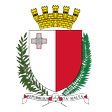
















The Malta Golden Visa, formally the Malta Permanent Residence Programme (MPRP), is the most direct way for a non-EU family to secure permanent residency inside the European Union without relocating. One government contribution, a qualifying property, and a clean due-diligence file convert into a permanent EU residence card, granted on approval, that carries a zero minimum-stay requirement and covers up to four generations under a single application. This guide sets out exactly how the programme works in 2026, what it costs after the July 2025 reform, who qualifies, and where Malta sits against Portugal, Greece and Italy.
Grants permanent EU residency on approval, not a temporary permit you renew toward a status.
Government contribution and admin fee total €97,000 for the main applicant, the same whether you rent or buy.
Separate from the contribution: rent from €14,000/yr or buy from €375,000, held five years.
Zero days, and no language test. The only time you must be in Malta is for biometrics.
A single application covers up to four generations, including parents and grandparents.
The MPRP is a residence programme. Malta's separate citizenship-by-investment route closed in 2025.
Definition
What is the Malta Golden Visa?
Quick answer The Malta Golden Visa is the Malta Permanent Residence Programme (MPRP). In exchange for a fixed government contribution, a five-year property commitment, and a small charity donation, a non-EU national and their family receive permanent residence in Malta, an EU member state, with the right to live in Malta indefinitely and travel visa-free across the Schengen Area.
Launched in 2021 and substantially reformed under Legal Notice 146 of 2025, the MPRP is Malta's flagship residency-by-investment offering. It is aimed squarely at the investor who wants a permanent, low-maintenance foothold in the European Union. Unlike most European golden visas, which issue a temporary permit that you renew every two or three years, Malta grants permanent residency from the moment your application is approved. There is no ladder to climb and no annual renewal race to keep pace with.
Three features define it. Permanence: the status is granted for life, subject only to a five-year card renewal that confirms the ongoing property and insurance obligations. Passivity: with zero minimum stay, you decide how much time to spend in Malta, so the card works equally well as an active home base or a dormant Plan B. Breadth: a single application can include a spouse, children of any age who are dependent, and parents and grandparents on both sides, which is the widest family reach of any comparable European programme.
Malta itself gives the residency real substance. It has been an EU member since 2004, part of the Schengen Area since 2007, and in the eurozone since 2008. English is an official language, so schooling, healthcare, banking and government all operate in English by default. For a family that may one day want to use the residence, not just hold it, that removes the friction that comes with most other destinations.
Availability
Is the Malta Golden Visa still available in 2026?
Quick answer Yes. The Malta Permanent Residence Programme is fully open in 2026 and, if anything, was made cheaper and faster by the July 2025 reform. What ended was Malta's separate citizenship-by-investment scheme, a different programme, after a European Court of Justice ruling in April 2025. The MPRP residence route was not affected.
This is the single most common point of confusion, so it is worth being precise. Malta ran two distinct programmes. One sold residency (the MPRP). The other, the citizenship-by-naturalisation-for-exceptional-services route, effectively sold a passport. On 29 April 2025 the Court of Justice of the European Union ruled that the citizenship route breached EU law, and Malta discontinued it. Headlines about Malta's golden passport being struck down refer to that citizenship scheme, not to the MPRP.
The residence programme continues to operate under the Residency Malta Agency exactly as before, and it remains one of the few EU golden visas still standing after a turbulent two years for the sector. Spain closed its golden visa entirely on 3 April 2025. Portugal removed its property route in 2023 and, from 19 May 2026, roughly doubled the time to citizenship. Against that backdrop, Malta's decision to reform and reprice its programme rather than restrict it makes it one of the more stable options on the board.
The reform that matters is Legal Notice 146 of 2025, effective from July 2025. It unified the main-applicant cost at €97,000 whether you rent or buy, reduced dependant fees, removed the fee for a spouse and minor children, and introduced a one-year temporary residence permit issued on application, so families can access Malta while the file is in process. None of this narrowed eligibility. The programme became more accessible, not less.
Eligibility
Malta Golden Visa requirements and eligibility
Quick answer To qualify for the Malta Golden Visa you must be a non-EU, non-EEA and non-Swiss national aged 18 or over, pass a strict due-diligence check, and demonstrate either €500,000 in total assets with at least €150,000 in liquid funds, or €650,000 in total assets with at least €75,000 liquid. You then satisfy the four programme obligations set out below.
Who qualifies
- Nationality Non-EU, non-EEA and non-Swiss nationals. EU citizens do not need the programme.
- Age and character At least 18, of good standing, with a clean criminal, professional and financial history.
- Assets €500,000 in total assets (€150,000 liquid) or €650,000 in total assets (€75,000 liquid).
- Due diligence Source of funds and source of wealth must be documented and pass the Agency's review.
The four obligations every approved applicant satisfies
| Obligation | Requirement |
|---|---|
| Contribution and admin fee | €97,000 total for the main applicant, paid in two instalments (€15,000 on submission, €82,000 after approval) |
| Charity donation | €2,000 to a registered Maltese NGO (cultural, sporting, environmental or animal welfare) |
| Qualifying property | Rent from €14,000 a year, or purchase from €375,000, held for a minimum of five years |
| Health insurance | A policy covering Malta and the rest of the EU, maintained throughout residency |
Certain nationalities are excluded on sanctions grounds. At the time of writing this includes Afghanistan, North Korea, Iran, the Democratic Republic of Congo, Somalia, South Sudan, Sudan, Syria, Yemen and Venezuela, and applications from the Russian Federation and Belarus are not currently accepted. This list is reviewed periodically, so the current position should always be checked at the time of application.
Figures reflect the framework under Legal Notice 146 of 2025. Programme rules can change, so confirm the current thresholds before filing.
Benefits
Benefits of the Malta Golden Visa
One investment produces a set of outcomes designed to flex with a family's life. These are the eight that matter most.
Permanent residency on approval
Not provisional. Permanent from the moment the application is approved, with no status ladder to climb.
Zero minimum stay
Live anywhere in the world. Malta is a base you can hold passively, with no physical presence to maintain it.
Four generations, one application
Main applicant, spouse, dependent children of any age, plus parents and grandparents on both sides.
Schengen travel from day one
Visa-free short-stay travel across all 29 Schengen countries, 90 days in any 180-day period.
No language requirement
English is an official language of Malta. No exam and no integration test for the MPRP.
Temporary permit on application
Under the July 2025 rules a one-year permit is issued early, so you access Malta before final approval.
Property optionality
Rent or buy. A purchased property can be let short-term when you are not in Malta, and sold after five years.
Indefinite and generational
Permanent residency can be held for life and factored into long-term family planning.
Routes
Malta Golden Visa investment options
Quick answer The Malta Golden Visa has one contribution structure and two property routes. Every applicant pays the €97,000 government contribution and admin fee, makes the €2,000 charity donation, and then either rents a qualifying property from €14,000 a year or buys one from €375,000. Both property routes lead to the same permanent residence card. They differ only in what happens to the capital.
It helps to separate the two moving parts. The contribution is fixed and identical for everyone. The property is where you choose. Renting is the lowest cash outlay and leaves nothing to manage or sell, but the rent is spent. Buying commits far more capital, yet that capital stays yours as a Maltese asset that can be let and, after the five-year hold, sold. Use the toggle to compare a single applicant across both routes.
| Component | Rent route | Purchase route |
|---|---|---|
| Government contribution + admin fee | €97,000 | €97,000 |
| Qualifying property | €14,000/yr, €70,000 over 5 years | From €375,000, retained |
| Charity donation | €2,000 | €2,000 |
| Capital preserved | None | €375,000 as a property asset |
| Best when your goal is | Lowest outlay | Keeping capital in a recoverable asset |
Contribution
The Malta government contribution explained
The core of the Malta Golden Visa is a government contribution and administration fee that together total €97,000 for the main applicant. Under Legal Notice 146 of 2025 this figure is unified: it is the same whether you rent or purchase your property, which removed a long-standing quirk where the rental route cost more. The €97,000 breaks down as a €60,000 administration fee and a €37,000 government contribution.
Payment is staged. You pay €15,000 within a month of submitting the application, which also triggers the one-year temporary residence permit under the reformed rules. The remaining €82,000, the balance of the admin fee plus the government contribution, falls due after your application receives approval in principle. None of this contribution is recoverable. It is the price of the residence status itself, distinct from the property, which on the purchase route you continue to own.
A spouse and minor children carry no separate contribution under the post-July 2025 rules. Each additional adult dependant, an adult child, parent or grandparent, carries €7,500, reduced from €10,000 in the reform. This is what makes Malta's four-generation reach so cost-effective compared with programmes that charge full fees per dependant.
Minimum
Malta Golden Visa minimum investment
Quick answer The minimum to enter the Malta Golden Visa is the €97,000 government contribution and admin fee, plus the €2,000 charity donation, plus a property commitment starting at €14,000 a year in rent. On the lowest-cost rental route, a single applicant is looking at roughly €170,000 committed over the five-year holding period, of which the rent portion is not recovered.
Two numbers are often confused. The headline €97,000 is the contribution, not the all-in cost. The lowest realistic entry, once the mandatory charity donation, the first year of rent and the residence card fee are added, sits above that. If you want to preserve capital rather than spend it, the purchase route raises the outlay to around €475,000 for a single applicant, but €375,000 of that is held as a property asset you continue to own.
Total cost
Malta Golden Visa cost and fees
Quick answer Budget roughly €170,000 all-in over five years for a single applicant on the rental route, or about €475,000 on the purchase route with €375,000 of that preserved as property. A family of four is roughly €173,000 renting or €478,000 buying, because a spouse and two minor children add no contribution, only card fees. The figures below cover government contributions, the charity donation, property and insurance only.
| Component | Amount | When due | Recoverable? |
|---|---|---|---|
| Contribution + admin fee (main applicant) | €97,000 | Staged: €15,000 + €82,000 | No |
| Charity donation to a Maltese NGO | €2,000 | Post-approval | No |
| Residence card fee, per applicant | €500 | At card issuance | No |
| Spouse and minor children | Free | n/a | n/a |
| Each adult child, parent or grandparent | €7,500 | Post-approval | No |
| Property, rent route | €14,000/yr, €70,000 over 5 years | Annual | No |
| Property, purchase route | From €375,000 | Post-approval | Yes, asset retained |
| Health insurance (indicative) | From €1,500/yr | Annual | No |
Worked example: a family of four
The example below is a main applicant, spouse and two minor children under the post-July 2025 framework. Both routes lead to the same permanent residence card. They differ in what happens to the property capital.
| Line item | Family of 4, rent | Family of 4, purchase |
|---|---|---|
| Property requirement | €14,000/yr × 5 = €70,000 | From €375,000 |
| Contribution + admin fee | €97,000 | €97,000 |
| Residence card fees (€500 × 4) | €2,000 | €2,000 |
| Charity donation | €2,000 | €2,000 |
| Health cover, indicative | ~€1,400 | ~€1,400 |
| Indicative total | ~€173,000 | ~€478,000 |
Read the two totals side by side. On the rental route the rent cash is gone at the end of the hold and no asset is retained. On the purchase route the €375,000 is preserved as a property you continue to own, can let short-term while you are away, and can sell after the five-year hold. The spouse and both children add no contribution, only the €500 card fee each, which is why a family of four costs barely more than a single applicant on the contribution side.
Get a personalised cost breakdown
We model the full all-in cost for your family across both property routes, including any home-country tax considerations, before you commit a euro.
Source of funds
Can you use cryptocurrency for the Malta Golden Visa?
Quick answer Not directly. The Malta Golden Visa is funded in euros through regulated banking channels, and the Residency Malta Agency requires a documented source of funds and source of wealth. Cryptocurrency gains can form part of your wealth, but they generally need to be liquidated to fiat and evidenced with a clear transaction trail before they will satisfy due diligence.
Malta has a well-developed framework for digital assets, so crypto wealth is not a barrier in itself. The issue is evidencing it. Anti-money-laundering rules mean the Agency and the banks want to see where the funds originated, how they were acquired, and how they moved into the account paying the contribution and property. Exchange records, dated purchase and sale statements, and tax filings that reference the holdings all help. Undocumented or privacy-coin holdings that cannot be traced will not pass. Plan the liquidation and paper trail well before you file.
Property
The Malta Golden Visa property requirement
Quick answer Every applicant must hold a qualifying Maltese property for at least five years, either by renting from €14,000 a year or by purchasing from €375,000, anywhere in Malta or Gozo. Under the July 2025 rules a purchased property can be let out short-term when you are not in Malta, and a rented property can be sub-let only after the five-year hold.
The reform simplified the property rules considerably. The old regional discounts and split thresholds were replaced with single figures: €14,000 a year to rent or €375,000 to buy, wherever the property is located across the islands. The five-year clock runs from the date residency is granted, not from the date of purchase, so the obligation is tied to your status.
The more meaningful change is flexibility. A purchased qualifying property may now be let on short-term terms during periods when you are not resident, which lets buyers generate income from an asset that would otherwise sit idle. After the five years, the property obligation is released entirely: you are no longer required to retain that specific home, though you must continue to hold a residential address in Malta or Gozo and keep valid health insurance for the residency to continue.
Donation
The Malta Golden Visa charity donation
Alongside the contribution and property, every application includes a one-off €2,000 donation to a registered Maltese non-governmental organisation working in culture, sport, the environment or animal welfare. It is paid after approval, it is not recoverable, and it is modest relative to the rest of the outlay. The requirement gives the programme a small civic dimension and is a fixed, predictable line rather than a variable cost.
Process
How to apply for the Malta Golden Visa
Quick answer You cannot apply to the MPRP directly. Applications must be filed through a licensed agent, who prepares your file, submits it to the Residency Malta Agency, and manages due diligence. The process runs in four stages over roughly four to six months, from engagement to the residence card in your hand.
- Engagement and preparation. Review of objectives, family composition and eligibility, then compilation of the application pack: forms, KYC, source-of-funds evidence and certified copies. An optional early visit to Malta lets you complete forms, meet a notary and view properties.
- Submission to the Residency Malta Agency. The €15,000 initial fee is paid, the file is formally submitted, and the one-year temporary residence permit is issued under the post-July 2025 rule. The Agency then runs three to four months of background checks and case review.
- Approval and fulfilment of obligations. After approval in principle you pay the remaining €82,000 and the €2,000 charity donation, sign the rental contract or complete the purchase, and take out the health insurance policy.
- Card issuance. A biometrics appointment in Malta is followed by the permanent residence card, valid five years and renewable while the property and insurance obligations are in place.
Timeline
Malta Golden Visa processing time
Quick answer Processing typically takes four to six months from submission of a complete application to approval in principle, with some files running to seven. The permanent residence card follows within a couple of weeks of fulfilling the obligations and attending biometrics. The July 2025 reform cut the previous six-to-nine-month window.
The bulk of the timeline is the Residency Malta Agency's due diligence, which runs for roughly three to four months of the total. A well-prepared file with clean, complete source-of-funds evidence moves faster than one that generates follow-up questions, which is the single biggest variable in the timeline. Because a temporary residence permit is now issued early in the process, families are not left waiting on the sidelines while the case is assessed, they can already access Malta.
Status
Malta Golden Visa: residency and citizenship
It is important to be clear about what the Malta Golden Visa is and is not. It grants permanent residence, a status that lets you live in Malta indefinitely and travel the Schengen Area, but it does not, by itself, give you a Maltese or EU passport. Residence and citizenship are separate legal statuses, reached by separate routes, and the MPRP is firmly a residence programme.
The residence itself is generous. It is permanent from approval, held for life subject to the five-year card renewal, and passes the ongoing obligations of property and insurance rather than any physical-presence test. What it does not do is convert automatically into citizenship after a set number of years. For that, you would have to pursue naturalisation on its own terms, which is covered in the next section.
Pathway
The MPRP pathway, step by step
From application to a residence obligation-free of property, here is how the programme unfolds over time.
Pay the €15,000 admin instalment, submit through a licensed agent, and receive the one-year temporary residence permit.
Pay the €82,000 balance and €2,000 donation, complete property and insurance, attend biometrics, receive the permanent residence card.
Maintain the qualifying property and insurance. Zero minimum stay applies throughout. Renew the card at year five.
The specific property obligation ends. Permanent residency continues indefinitely with a Maltese address and insurance.
Citizenship
Can the Malta Golden Visa lead to citizenship?
Quick answer No, not on its own. The MPRP grants permanent residence, not citizenship. A Maltese passport is only reachable through ordinary naturalisation, which requires substantial physical residence in Malta, language ability, good character and ministerial discretion. Simply holding the MPRP without living in Malta does not qualify you.
Ordinary naturalisation under Cap. 188 of the Laws of Malta requires twelve months of continuous physical residence in Malta immediately before the application, plus at least four cumulative years of physical residence in the six years preceding that. Applicants must also show adequate Maltese or English, good character, and two sponsors, and the final decision is discretionary. A separate Citizenship by Merit route, assessed case by case, was introduced alongside the 2025 reforms for exceptional contributions.
The honest framing is this. If your goal is an EU passport without relocating, Malta is not the vehicle, and the Portugal Golden Visa has historically been the route that fits, though its 2026 nationality law now stretches that timeline. If your goal is a permanent, secure EU base that you can activate whenever you choose, the MPRP delivers exactly that, and it leaves the door to naturalisation open for anyone who does decide to spend real time on the islands.
Passport power
Malta passport power in context
The Malta Golden Visa gives residence and Schengen travel, not a passport. Still, it is useful to see how the Maltese passport, reachable only through naturalisation, compares with the passports on offer through other investment-migration destinations. Select a country to see an indicative visa-free count and what each route delivers.
Visa-free counts are indicative and vary by index and year. EU citizenship rights come with a passport, not with the residence permit.
Language
Is there a language requirement for the Malta Golden Visa?
Quick answer No. The MPRP has no language requirement and no integration test. English is an official language of Malta, so there is no exam to sit for the residence programme. A language assessment applies only to naturalisation, which is a separate process.
For internationally mobile families this removes a real point of friction. Many residency and citizenship programmes attach a language or civics test that has to be passed, sometimes after months of study. Malta asks for none of that at the residence stage, and because daily life on the islands runs in English by default, families that do decide to spend time there are not starting from a standing start.
The investor mix
Who is investing in the Malta Golden Visa?
The MPRP draws a particular kind of applicant: families who want the security of an EU base without the disruption of moving there. The largest source markets are broadly consistent with the wider golden-visa sector.
- Middle East and Gulf residents, including expatriates in the UAE and Saudi Arabia seeking a stable EU foothold.
- Turkish and North African families looking for currency and political diversification close to home.
- South and East Asian investors, particularly from India and Southeast Asia, drawn by the English-language environment.
- African high-net-worth families, notably from Nigeria and South Africa, prioritising a secure Plan B.
- Latin American families seeking European optionality alongside their existing residency plans.
The common thread is intent. These are not applicants chasing a quick passport. They are families buying permanence and optionality, the ability to be in the EU when they want to be, with the paperwork already done.
For US citizens
The Malta Golden Visa for US citizens
Malta is a natural fit for Americans who want an EU base without giving up life in the United States. The zero minimum stay means you keep your US home, work and tax residency intact while holding permanent EU residence in reserve. English as an official language and a common-law legal heritage make the transition, if you ever activate it, unusually smooth for a US family.
The practical draw is optionality. A US passport is strong, but it ties your mobility and your tax exposure to a single country. Maltese permanent residence adds a second, secure jurisdiction inside the EU that you control, useful for schooling in Europe, for a slower-paced base in the Mediterranean, or simply as insurance. The catch to plan around is tax, which is covered next.
US taxes
US taxes: FBAR, FATCA and what to plan for
Quick answer Holding Maltese residence does not change the fact that the United States taxes its citizens on worldwide income wherever they live. If you open Maltese bank accounts or hold Maltese assets, you will likely have FBAR and FATCA reporting obligations, and any Maltese investments should be screened for the US PFIC rules. None of this is a reason to avoid the programme, but it should be modelled up front.
The mechanics are familiar to any American with foreign accounts. An FBAR (FinCEN Form 114) is required once your foreign financial accounts exceed 10,000 US dollars in aggregate at any point in the year. FATCA reporting on Form 8938 can also apply above higher thresholds. Because the US taxes on citizenship rather than residence, moving assets to Malta does not reduce US tax on its own, and pooled foreign funds can trigger the punitive PFIC regime. The workable approach is to coordinate the Maltese structure with a US cross-border tax adviser before funding, so the reporting is clean and the investments are PFIC-aware from day one. This is general information, not tax advice.
For UK citizens
The Malta Golden Visa for UK citizens
Since Brexit, British nationals have lost the automatic right to live in the EU, and Malta is one of the most comfortable ways to get part of it back. The shared history is unusually close: two centuries of British presence shaped Malta's legal system, its schools and its use of English, so a UK family arrives to familiar institutions rather than a foreign system. The MPRP restores the ability to hold permanent EU residence and to move freely through Schengen.
For retirees, remote professionals and families with one eye on European schooling, Malta offers a Mediterranean base with English-language daily life, a common-law-influenced legal framework, and a short flight home. The zero minimum stay means it can sit quietly alongside a UK life until it is needed.
For UAE residents
The Malta Golden Visa for UAE residents
Expatriates in the UAE are among the most active applicants for European residency, and Malta suits their profile well. A UAE residence visa is tied to employment or a local structure and does not lead anywhere permanent. Maltese permanent residence adds a secure, standalone EU status that does not depend on a job, a sponsor or continued presence in the Gulf.
The tax-neutral environment many enjoy in the UAE can be preserved, because Malta's zero minimum stay means acquiring the residence does not force a change in where you live or pay tax. It becomes a European anchor alongside the Gulf base, ready to activate for family, education or long-term security.
For Brazilians
The Malta Golden Visa for Brazilians
Brazilian families are drawn to European residency for diversification against currency and political cycles at home, and Malta provides a stable EU base that does not require relocation. Portuguese speakers will find the wider EU familiar, and the MPRP sits comfortably alongside existing plans, whether a Portuguese ancestry claim or a broader Latin American Plan B.
Malta's appeal for a Brazilian applicant is the combination of permanence and passivity. The residence is granted for life on approval, yet nothing about it forces a move, so it can be held as insurance while business and family stay rooted in Brazil, then used when the moment is right.
For Indian nationals
The Malta Golden Visa for Indian nationals
Quick answer Malta is a strong fit for Indian families thanks to its English-language environment, but the funding must be planned around India's Liberalised Remittance Scheme (LRS), which caps outward remittance at 250,000 US dollars per person per financial year. Larger commitments are typically structured across family members and financial years, with proper documentation.
The LRS is the main practical constraint. Because a full purchase-route commitment exceeds the annual per-person cap, Indian applicants often use the rental route, spread contributions across eligible family members, or phase funding across two financial years. Every remittance needs a clean paper trail for both the Indian authorities and the Residency Malta Agency. Handled correctly, none of this is a barrier, but it should be mapped before any money moves. English-medium schooling and a large Indian professional diaspora across Europe add to Malta's appeal.
For Canadians
The Malta Golden Visa for Canadians
Canadians use Maltese residence for European optionality and a warm-weather base, without the tax complications Americans face. Canada taxes on residence rather than citizenship, so a Canadian who does not become Maltese tax-resident generally does not create new Canadian tax exposure simply by holding the card, though anyone contemplating a genuine move should take advice on severing or retaining Canadian tax residency.
The draw is a familiar English-language environment inside the EU, a Commonwealth connection, and a Mediterranean lifestyle a manageable flight from the eastern seaboard. As always, the zero-stay design means the residence can be held in reserve indefinitely.
For Nigerians
The Malta Golden Visa for Nigerians
For Nigerian high-net-worth families, Malta offers exactly what a strong Plan B should: a secure, permanent EU base and visa-free Schengen travel that a Nigerian passport alone does not provide. The English-language environment and a well-established international school network make it a practical destination for families prioritising education and security.
Documentation is the area to prepare carefully. Source-of-funds and source-of-wealth evidence must be thorough and clearly traceable to satisfy the Agency's due diligence, so assembling clean records early is the single most useful thing a Nigerian applicant can do to keep the timeline on track.
Notable residents
Notable residents of Malta
Malta has long attracted internationally mobile individuals, from entrepreneurs and finance professionals to retirees drawn by the climate and the English-language environment. The islands host a substantial community of expatriate business owners and remote professionals, alongside a gaming and technology sector that has brought a younger international workforce.
Routes into Malta vary, and residence status is private, so specific individuals are not listed here. The point is the profile: Malta draws people who value a stable, English-speaking EU base, which is precisely what the MPRP is designed to provide.
Comparison
Malta Golden Visa vs other Malta visas
The MPRP is not Malta's only residence route. It is the one built for a permanent, passive EU base. The alternatives suit different situations.
| Route | Best for | Key feature |
|---|---|---|
| MPRP (Golden Visa) | Permanent EU base | Permanent residence on approval, zero stay |
| Global Residence Programme | Tax-focused residents | Special 15% tax status on foreign income remitted to Malta |
| Nomad Residence Permit | Remote workers | Live in Malta while working for a foreign employer |
| Ordinary residence | EU nationals and workers | For those relocating and working in Malta |
| Startup Residence | Founders | For entrepreneurs establishing a qualifying Maltese business |
For most non-EU investors seeking a Plan B rather than a relocation, the MPRP is the right tool, because it delivers permanence without requiring you to live, work or run a business in Malta.
Alternatives
Other Malta residency routes
A common misconception is that investment is the only way into Malta. It is not. If you intend to relocate, work remotely or start a business, one of the routes below may fit better and cost less than the MPRP.
Global Residence Programme
A tax-led residence for non-EU nationals, offering a flat 15% rate on foreign income remitted to Malta, subject to a minimum annual tax. Suited to those making Malta a genuine tax base.
Nomad Residence Permit
For remote workers employed by, or running, a business outside Malta. Lets you live on the islands without the MPRP contribution, though it is not permanent.
Startup Residence Programme
For founders establishing an innovative Maltese business, with a route for the team and family. Built around genuine entrepreneurial activity.
Ordinary residence
For EU nationals, or those relocating to work or study in Malta. The standard route for people who are moving.
Not everyone who asks about the golden visa needs it. If you are going to live in Malta, a work, nomad or ordinary-residence route is often cheaper and just as effective. The MPRP earns its cost when what you want is permanence without relocation.
Regional comparison
Malta vs Portugal, Greece and Italy
Quick answer Malta and Portugal answer different questions, and both are legitimate. If your goal is an EU passport without relocating, Portugal remains the only major EU programme that delivers one without a physical move. If your goal is permanent EU residency at the lowest entry with the broadest family reach, Malta grants it on approval with zero minimum stay and four generations in a single file. Greece is the lowest-investment real-estate route, and Italy suits the Italy-focused investor.
| Malta | Portugal | Greece | Italy | |
|---|---|---|---|---|
| Lowest entry | €97,000 + €14k/yr rent, or €97,000 + €375k purchase | €500k fund, €250k donation, or €325k hospitality | From €250k, commercial-to-residential | From €250k, startup |
| Status granted | Permanent on approval | 2-year renewable | 5-year renewable PR | 2-year then 3-year |
| Minimum stay | Zero | 7 days / year | Zero | Zero |
| Citizenship eligibility | 12 months + 4 years physical residence, language, discretionary | 7 or 10 years, no relocation | After 7 years physical residence | After 10 years physical residence |
| Best for | Lowest-entry EU PR, broadest family reunification | EU passport without relocation | Lowest-investment EU PR via real estate | Italy-focused investor |
| King for EU residency | Best for citizenship |
The honest read is that no single programme wins on every axis. Greece beats Malta on the raw price of a real-estate entry in its cheapest zones. Portugal remains the only route to an EU passport without living there, even after its timeline lengthened. What Malta wins on is the combination the others cannot match together: permanent status from day one, zero stay, four generations in one file, and an English-language jurisdiction, at the lowest overall entry for permanent residence.
Verdict
Is the Malta Golden Visa worth it?
Quick answer For a non-EU family that wants a permanent, secure EU base without relocating, yes. The MPRP delivers permanent residency, zero minimum stay, four-generation coverage and Schengen travel at the lowest overall entry cost of any comparable European programme. It is not worth it if your real goal is an EU passport, in which case Portugal, not Malta, is the vehicle.
Match the programme to the goal. If you are buying permanence and optionality, the ability to hold EU residence for life and activate it whenever you choose, Malta is hard to better on value once you weigh the zero-stay design and the family reach. If you are buying a passport, the MPRP is the wrong tool, because it does not lead to citizenship on its own. Being clear about which of those two things you want is the whole decision.
By the numbers
Malta Golden Visa statistics
Malta is a small jurisdiction, roughly 316 square kilometres and around 575,000 residents, which is part of why it can process files relatively quickly and keep the programme tightly managed. The MPRP has run since 2021 and was reformed in 2025 to be cheaper and faster, a signal that Malta intends to keep the programme open and competitive rather than wind it down.
Advisers
Choosing a Malta Golden Visa adviser
Because MPRP applications must be filed through a licensed agent, the quality of that agent shapes the whole experience. The file has to be assembled correctly, the source-of-funds evidence has to anticipate the Agency's questions, and the property and insurance steps have to be sequenced properly, or the timeline slips.
- Licensed and experienced Work with an accredited agent with a track record of approved MPRP files.
- Honest on fit A good adviser tells you when a cheaper route suits you better than the golden visa.
- Source-of-funds fluent The single biggest cause of delay is a weak funds file. Expertise here saves months.
- Cross-border aware Your home-country tax and reporting should be coordinated, not left as an afterthought.
FAQ
Malta Golden Visa: frequently asked questions
Is the Malta Golden Visa still available in 2026?
Yes. The Malta Permanent Residence Programme (MPRP) is fully open in 2026. The separate citizenship-by-investment scheme was discontinued after the April 2025 ruling by the Court of Justice of the European Union, but the MPRP residence route was not affected.
How much does the Malta Golden Visa cost?
The government contribution and admin fee total €97,000 for the main applicant, plus a €2,000 charity donation and a property commitment, either renting from €14,000 a year or buying from €375,000. A single applicant on the rental route is roughly €170,000 all-in over five years.
What are the requirements for the Malta Golden Visa?
You must be a non-EU, non-EEA and non-Swiss national aged 18 or over, pass due diligence, and hold either €500,000 in assets with €150,000 liquid, or €650,000 with €75,000 liquid. You then meet the four obligations: contribution, charity donation, qualifying property and health insurance.
Do I have to live in Malta to keep the residency?
No. There is no minimum-stay requirement to obtain or maintain the MPRP. The only obligatory presence in Malta is for biometrics. The residence card is valid for five years and renewable while the requirements are met.
How long does the Malta Golden Visa take?
Typically four to six months from submission of a complete application to approval in principle, with some files extending to seven. The residence card follows within a few weeks of fulfilling the obligations and attending biometrics.
Does the Malta Golden Visa lead to citizenship?
No, not on its own. The MPRP grants permanent residence. A Maltese passport is only reachable through ordinary naturalisation, which requires substantial physical residence in Malta, language ability, good character and ministerial discretion.
Can I include my family?
Yes. A single application can cover four generations: the main applicant, spouse, dependent children of any age, and parents and grandparents on both sides. Spouse and minor children carry no separate contribution; each adult dependant carries €7,500.
Should I rent or buy the property?
Both routes lead to the same residence card. Renting from €14,000 a year is the lowest outlay but the cash is not recovered. Buying from €375,000 commits more capital but that capital is retained as an asset you can let and, after the five-year hold, sell.
Can I use cryptocurrency for the Malta Golden Visa?
Not directly. The programme is funded in euros through regulated banking. Crypto gains can form part of your wealth but generally need to be liquidated to fiat and evidenced with a clear transaction trail to satisfy source-of-funds due diligence.
Which is better, the Portugal or Malta Golden Visa?
It depends on your goal. Portugal is the route to an EU passport without relocating, though its 2026 law lengthened that timeline. Malta is the lowest-entry route to permanent EU residency with zero stay and the broadest family inclusion. They answer different questions.
Can I work in Malta with the MPRP?
Yes, but not automatically. The MPRP card does not by itself grant the right to take up employment; a separate employment licence from Jobsplus is required. Self-employment through a Maltese company is also possible with the usual authorisations.

Last reviewed 24 July 2026.
This guide is general information, not legal, tax or immigration advice. Programme terms are set by the relevant government and can change; confirm any figure with the authority, or with us, before acting on it.